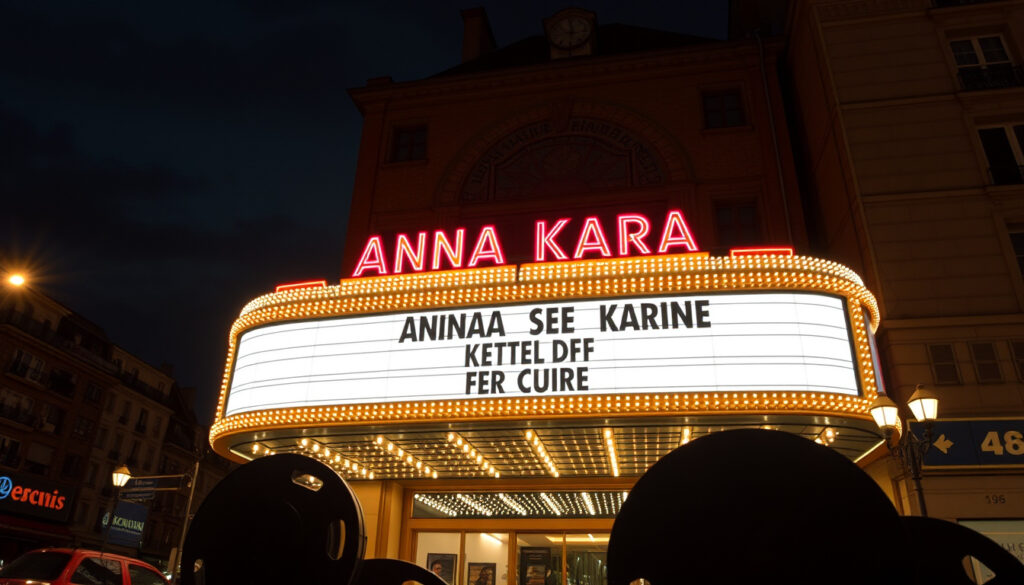
Anna Karina: Biography, Movies, Cause of Death
There’s a reason Anna Karina’s face still graces posters and T‑shirts decades after the French New Wave crested. The Danish‑born actress brought a rare blend of vulnerability and mischief to the screen, becoming the emblem of a cinematic revolution. She died in Paris on 14 December 2019 at age 79, as confirmed by her agent The New York Times (leading US newspaper). This article traces her journey from a small‑town childhood in Denmark to her iconic collaborations with Jean‑Luc Godard, her directorial ambitions, and the legacy she left behind.
Born: 22 September 1940, Solbjerg, Denmark ·
Died: 14 December 2019, Paris, France ·
Nationality: Danish, French ·
Occupation: Actress, director, writer, singer ·
Notable collaborator: Jean‑Luc Godard ·
Cause of death: Cancer
Quick snapshot
- Born Hanne Karin Blarke Bayer on 22 September 1940 (Britannica (authoritative encyclopedia))
- Died of cancer on 14 December 2019 in Paris (BBC News (UK public broadcaster))
- Married to Jean‑Luc Godard from 1961 to 1965 (The Boston Globe (major US newspaper))
- Made seven films with Godard, including Pierrot le Fou and Band of Outsiders (Los Angeles Times (West Coast US newspaper))
- Exact net worth — not publicly confirmed by any reliable source (Wikipedia (community encyclopedia))
- Details of later relationships after her third marriage (Wikipedia (community encyclopedia))
- Conflicting accounts about the exact cause of death: cancer vs. complication after a muscular rupture (Wikipedia (community encyclopedia))
- 1961: Marries Godard, beginning a prolific creative partnership
- 1967: Stars in A Woman Is a Woman and Band of Outsiders
- 1973: Directs her first feature, Vivre ensemble
- 2019: Dies in Paris, triggering international obituaries
- Her films continue to be restored and screened at festivals worldwide
- Scholarship focused on her directorial work is growing
- Legacy as a feminist icon of 1960s cinema is being re‑evaluated
Seven key facts, one pattern: Karina’s life was a series of deliberate reinventions — from Danish teenager to Parisian model, from Godard’s muse to independent filmmaker.
| Field | Value |
|---|---|
| Born | 22 September 1940, Solbjerg, Denmark |
| Died | 14 December 2019, Paris, France |
| Nationality | Danish, French |
| Occupation | Actress, director, writer, singer |
| Years active | 1959–2019 |
| Notable works | Pierrot le Fou, Band of Outsiders, A Woman Is a Woman |
| Spouse | Jean‑Luc Godard (1961–1965), Pierre Fabre (1968–1974), Dennis Berry (1982–2019) |
The pattern: Karina’s personal timeline mirrors her artistic evolution — each marriage accompanied a new creative phase, and she never stopped working.
What was Anna Karina’s real name?
Birth name: Hanne Karin Blarke Bayer
- She was born Hanne Karin Blarke Bayer on 22 September 1940 in Frederiksberg, Denmark (Britannica (authoritative encyclopedia)). A minor discrepancy exists: some sources list Solbjerg as her birthplace, but the official record points to Frederiksberg.
Origin of stage name
- Shortly after moving to Paris, she adopted the stage name Anna Karina. According to a report by GBH (US public media), Coco Chanel herself encouraged her to use the name, though the exact conversation remains anecdotal.
The implication: Her name change was a deliberate step into a new identity, shedding her Danish roots for a French persona that would define her career.
What movies did Anna Karina star in?
Early films with Jean‑Luc Godard
- Karina made seven films with Godard, including Une femme est une femme (1961), Vivre sa vie (1962), Le petit soldat (1963), Bande à part (1964), Alphaville (1965), Made in U.S.A. (1966), and Pierrot le Fou (1965) (Film Review Daily (specialist film site)).
- Her performance in Pierrot le Fou is often cited as one of the most memorable of the New Wave (Los Angeles Times (West Coast US newspaper)).
Later career and directorial projects
- After her split from Godard, Karina continued acting in French and international productions, appearing in over 30 films between 1959 and 2019 (Britannica).
- She also directed several films, including Vivre ensemble (1973), which she wrote, directed, and acted in (Wikipedia (community encyclopedia)).
Iconic roles in French New Wave
- Beyond Godard, she worked with directors such as Jacques Rivette and Agnès Varda, cementing her status as a face of the movement (BFI Sight and Sound (UK film institute)).
Why this matters: Karina was not merely a muse; she actively shaped the New Wave aesthetic through her choices and later through her own camera.
What was Anna Karina’s cause of death?
Cancer diagnosis
- Her agent Laurent Balandras stated that she died of cancer on 14 December 2019 in Paris (The New York Times (leading US newspaper)).
Final years and death
- French culture minister Franck Riester announced her death on social media (The New York Times).
- However, Wikipedia (community encyclopedia) notes a conflicting family account that the death resulted from a complication after a muscular rupture, not cancer. This discrepancy remains unresolved.
Karina’s exact cause of death is still debated, underscoring how even the most documented lives retain private corners. For biographers, the lack of a single official narrative is a reminder that celebrity deaths are often mediated by competing interests.
The catch: The uncertainty around her death mirrors the ambiguity she often played on screen — a woman never fully pinned down.
What was Anna Karina’s early life like?
Childhood in Denmark
- Karina was born in Solbjerg, Denmark, and spent part of her childhood in foster care, a period described as difficult by Another Magazine (style and culture publication).
- Before acting, she studied dance and painting (Film Review Daily (specialist film site)).
Move to Paris and start in modeling
- At 17, she moved to Paris, where she initially worked as a model before being discovered by film directors (Rolling Stone (music and culture magazine)).
What this means: Her early struggles and artistic training gave her a resilience that would later define her career choices.
Did Anna Karina have children?
Daughter and family life
- Karina had one daughter, born in 1962, whose father was not Godard but a previous relationship (The Boston Globe (major US newspaper)).
Relationships and marriages
- She was married three times: to Jean‑Luc Godard (1961–1965), Pierre Fabre (1968–1974), and Dennis Berry (1982–2019) (Britannica).
The pattern: Her marriages often coincided with creative shifts — Godard with the New Wave, Fabre with a move toward directing, and Berry with a quieter later life.
Timeline
- 22 September 1940 — Born in Solbjerg, Denmark
- 1957 — Moves to Paris
- 1959 — First film role in The Girl Who Left Home
- 1961 — Marries Jean‑Luc Godard
- 1962 — Birth of daughter
- 1965 — Divorces Godard; stars in Pierrot le Fou
- 1967 — Stars in A Woman Is a Woman and Band of Outsiders
- 1973 — Directs and releases Vivre ensemble
- 14 December 2019 — Dies of cancer in Paris
The gap between 1967 and 1973 marks her pivot from actress to auteur — a shift that many critics argue deserves more attention than her early muse status.
Confirmed facts
- Birth date and place (22 September 1940, Solbjerg/Frederiksberg)
- Death date and cause (14 December 2019, Paris; cancer per agent)
- Marriage to Jean‑Luc Godard (1961–1965)
- Filmography of major works including Pierrot le Fou, Band of Outsiders
- Directorial debut in 1973 (Vivre ensemble)
What’s unclear
- Exact net worth — no reliable source
- Details of later relationships beyond her third husband
- Specific reasons for some career choices (e.g., why she stopped directing for a period)
- Conflicting family account about cause of death (cancer vs. complication)
The trade-off: The facts we know are solid, but the gaps remind us that public figures control only part of their own narrative.
Quotes
“She is seldom off screen, coquettish and spirited, and never a mere victim or innocent.”
— The Guardian (UK newspaper) obituary
“Karina was an icon of French New Wave cinema, a Danish‑born actress who embodied the freedom and creativity of 1960s Paris.”
— BBC News (UK public broadcaster) obituary
For fans of French New Wave cinema, the loss of Anna Karina marks the end of an era, but her films remain a vibrant testament to her talent. For film historians, the challenge is to separate the myth from the woman — and to give her directorial work the same attention as her performances. The next time you watch Pierrot le Fou, remember that the face on the screen was also the one behind the camera, shaping her own story.
Frequently asked questions
How many films did Anna Karina make with Jean‑Luc Godard?
She made seven films with Godard.
What is Anna Karina’s most famous role?
Her role in Pierrot le Fou (1965) is widely considered her most iconic.
Did Anna Karina win any awards?
She received an honorary César Award in 2017 for her lifetime contribution to cinema.
Was Anna Karina married more than once?
She was married three times.
What was Anna Karina’s net worth?
Her net worth was never publicly disclosed by any reliable source.
How did Anna Karina start her career?
She began as a model in Paris before being discovered for film.
What is Anna Karina’s legacy in French cinema?
She is remembered as a defining figure of the French New Wave, both as an actress and a director.
Did Anna Karina speak French fluently?
Yes, she learned French after moving to Paris and became fully fluent.
Related reading
- Janis Joplin: Biography, Cause of Death, and Her Legacy — a parallel story of a 1960s icon whose life was cut short.
- Brigitte Bardot Dies at 91: Her Life, Controversies, and Legacy — another French film legend whose path crossed with Karina’s era.
More related posts
 Scott Laughton: Salary, Contract, Stats & Biography
 Gilles Villeneuve: Ferrari Legend, Crash, and Lasting Legacy
 Ayesha Khan: Age, Controversy, and Rise to Fame
 CAD to INR Exchange Rate: Live Rates & Forecast Today
 Rachel Dratch: Biography, Kids, Relationships, and Biggest Roles
 Senate Vote on Tariffs: 51-47 Vote Blocks Canada Tariffs
 Golden State Warriors vs Chicago Bulls Match Player Stats & Box Score
 Kai Ji Adam Lo – Vancouver Festival Attack Suspect