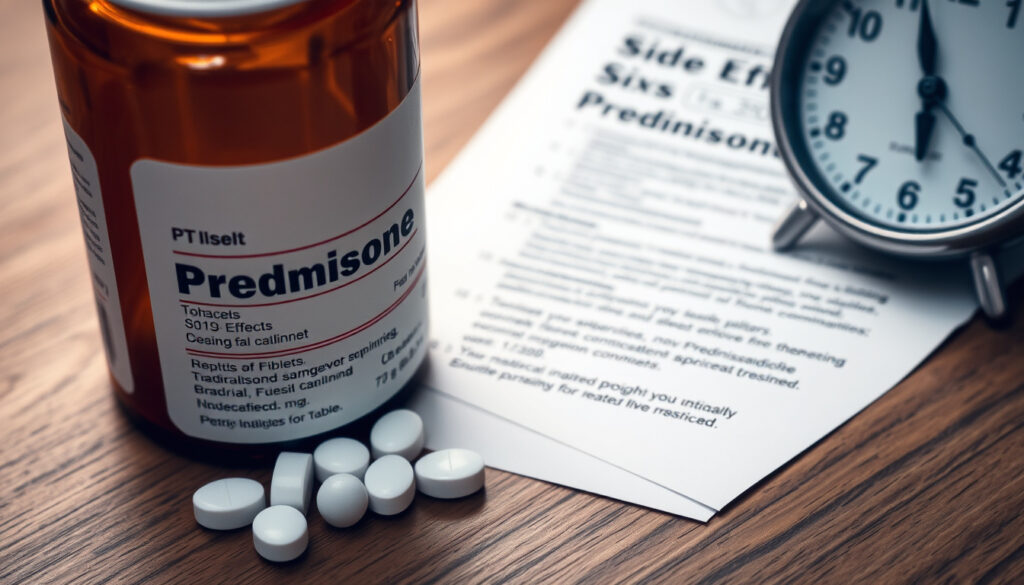
Side Effects of Prednisone: Common and Long-Term Risks
Few medications deliver relief as powerfully as prednisone — but that power comes with a long list of possible side effects, most of which are manageable if you know what to expect. By understanding how dose and duration influence risks, you can take an active role in minimizing harm while still treating your condition.
Most common short-term side effect: nausea, headache, insomnia ·
Most common long-term side effect: weight gain, moon face ·
Serious risk with prolonged use: osteoporosis and bone thinning
Quick snapshot
- Weight gain is the most common long-term side effect (UK National Health Service (NHS))
- Long-term use increases osteoporosis risk — up to 40% of patients develop bone loss (StatPearls via NCBI)
- Prednisone can cause high blood pressure, diabetes, and glaucoma (American Lung Association)
- Withdrawal side effects occur if stopped abruptly after more than a few weeks (NHS)
- The exact percentage of patients who develop moon face varies widely by dose and individual (StatPearls)
- The mechanism behind steroid-induced mood changes is not fully understood (American Lung Association)
- Why some patients tolerate high doses without major side effects while others do not remains unclear (Sjögren’s Foundation)
- The exact percentage of patients experiencing weight gain varies and is not precisely known (NHS) (StatPearls)
- First few days: insomnia, heartburn, mood changes (Ubie Health)
- 1–4 weeks: increased appetite, weight gain, fluid retention (NHS) (Ubie Health)
- Months to years: osteoporosis, diabetes, Cushing’s syndrome (StatPearls) (Ubie Health)
- Gradual tapering under medical supervision is essential to avoid withdrawal (NHS)
- Monitor bone density if on long-term therapy; consider calcium and vitamin D supplements (StatPearls)
- Regular blood sugar and blood pressure checks are recommended (American Lung Association)
Of the dozen or so side effects patients commonly report, one pattern stands out: the higher the dose and the longer the course, the more likely you are to experience both short‑term discomfort and lasting harm. The table below lays out the key facts.
| Label | Value (with source) |
|---|---|
| Drug class | Corticosteroid (NHS) |
| Most common side effect | Weight gain (NHS) |
| Serious risk | Osteoporosis, bone loss (StatPearls) |
| Dose dependence | Yes — higher dose = higher risk (StatPearls) |
| Time dependence | Yes — longer use = more side effects (NHS) |
| Withdrawal risk | Yes — after >3 weeks (NHS) |
| Infection risk | Increased due to immune suppression (American Lung Association) |
| Bone thinning prevalence | Reportedly up to 40% of long‑term users (StatPearls) |
| Cataract risk threshold | Above 10 mg/day for >1 year (StatPearls) |
| Psychosis risk threshold | Above 20 mg/day for prolonged period (StatPearls) |
| Fluid retention | Common, especially with higher doses (American Lung Association) |
| Blood sugar increase | Frequent; can unmask or worsen diabetes (American Lung Association) |
What’s the most common side effect of prednisone?
- Increased appetite and weight gain top the list — roughly half of patients report them (NHS)
- Insomnia, mood changes, and stomach upset are also very common (Ubie Health)
What is the biggest side effect of prednisone?
- Weight gain is the most frequently cited side effect, but the biggest threat is osteoporosis — irreversible bone loss (StatPearls)
- For many patients, Cushing’s syndrome (moon face, buffalo hump) becomes the most visually dramatic change (Sjögren’s Foundation)
The pattern: short‑term use usually brings manageable nuisances; long‑term use shifts the risk toward permanent damage. Why this matters: the “most common” side effect isn’t always the most dangerous — and patients often underestimate the silent harm to bones and metabolism.
What organ is prednisone hard on?
- Bones are the most vulnerable — glucocorticoid‑induced osteoporosis is one of the most devastating long‑term effects (StatPearls)
- Prednisone also stresses the liver, kidneys, eyes (cataracts, glaucoma), and cardiovascular system (American Lung Association)
How does prednisone affect bones?
- StatPearls reports that up to 40% of patients on long‑term glucocorticoids develop bone loss leading to fractures (StatPearls)
- Osteonecrosis (death of bone tissue) can occur with doses above 20 mg daily (StatPearls)
- Bone thinning is often silent until a fracture happens — regular DEXA scans are advisable for users on high‑dose therapy (NHS)
The trade‑off: strong anti‑inflammatory benefit versus accelerated bone loss that can begin within weeks. For patients on long‑term therapy, protecting bone health should be a priority from day one.
What should you avoid while on prednisone?
- Avoid NSAIDs (ibuprofen, naproxen) — they increase stomach ulcer risk (NHS)
- Avoid alcohol — it worsens stomach irritation and can affect liver function (American Lung Association)
- Reduce sodium intake to limit fluid retention and high blood pressure (NHS)
What food and drugs should be avoided?
- Rich, spicy foods can aggravate indigestion — the NHS recommends bland meals (NHS)
- Avoid large amounts of sugar or simple carbohydrates to help control blood sugar spikes (American Lung Association)
- Live vaccines should be avoided due to immune suppression (American Lung Association)
The catch: many everyday items interact with prednisone. A quick check with your pharmacist can prevent unnecessary side effects.
What are the dangers of taking prednisone?
- Diabetes — steroid‑induced hyperglycemia can develop even in people without prior diabetes (American Lung Association)
- High blood pressure — fluid retention and vasoconstriction raise BP (NHS)
- Cushing’s syndrome — moon face, buffalo hump, central obesity, skin thinning (Sjögren’s Foundation)
- Infection risk — immune suppression makes even mild infections dangerous (American Lung Association)
Why do doctors not like prednisone?
- Because the therapeutic window is narrow: effective anti‑inflammation vs. potentially irreversible side effects (StatPearls)
- Side effects are dose‑dependent but also unpredictable — two patients on the same regimen can have vastly different outcomes (Sjögren’s Foundation)
- Stopping suddenly after prolonged use can cause adrenal insufficiency, a life‑threatening condition (NHS)
The implication: prednisone is a tool, not a cure. Doctors prescribe it reluctantly when other options have failed.
What are the worst side effects of steroids?
- Osteoporosis with fractures — irreversible and often painless until it’s too late (StatPearls)
- Glaucoma and cataracts — can cause permanent vision loss (American Lung Association)
- Psychiatric effects: severe depression, anxiety, or steroid‑induced psychosis at high doses (StatPearls)
- Avascular necrosis (osteonecrosis) — joint collapse, especially in the hip (StatPearls)
What are the risks of steroid use for teens?
- Growth suppression — prednisone can stunt height in adolescents (NHS)
- Delayed puberty and hormonal imbalances (American Lung Association)
- Bone development is highly active in teens; steroid‑induced osteoporosis can have lifelong consequences (StatPearls)
The bottom line for young people: prednisone is used only when the condition being treated is more dangerous than the side effects. The risks are real.
Confirmed facts
- Weight gain is a common side effect of prednisone (NHS)
- Long-term use increases osteoporosis risk (StatPearls)
- Higher dose and longer duration increase side‑effect risk (NHS)
- Abrupt withdrawal after weeks of use can cause adrenal crisis (NHS)
- Prednisone can raise blood sugar and blood pressure (American Lung Association)
What’s unclear
- Exact incidence of moon face varies widely; not well quantified (Sjögren’s Foundation)
- Mechanism of mood changes is not fully understood (American Lung Association)
- Why some patients tolerate high doses without major side effects remains unclear (StatPearls)
- Long‑term impact of low‑dose (≤7.5 mg/day) therapy on fracture risk is still debated (Sjögren’s Foundation)
- The exact percentage of patients experiencing weight gain varies and is not precisely known (NHS)
“The higher the dose and the longer the treatment, the greater the chance of side effects.”
“Common oral corticosteroid side effects include weight gain, fluid retention, increased blood sugar, high blood pressure, bone thinning, increased infection risk, mood swings, and eye problems such as glaucoma or cataracts.”
“Even low doses of prednisone (≤7.5 mg/day) can cause side effects such as elevated blood pressure, swelling, blood sugar changes, and weight gain.”
“Glucocorticoid‑induced osteoporosis is one of the most well‑known and devastating adverse effects of long‑term glucocorticoid use.”
— StatPearls (via NCBI)
The pattern across every source is consistent: prednisone’s side effects are dose‑ and duration‑dependent, and the line between therapeutic benefit and lasting harm is thin. For patients, the implication is clear: use the lowest effective dose for the shortest possible duration, and never stop suddenly without medical guidance. Otherwise, the very medication that provides relief can become a source of new, preventable health problems.
Patients on long‑term prednisone face a real dilemma: continue and accept bone loss, diabetes risk, and immune suppression, or taper off and risk the underlying condition flaring. The only safe path is a tapering plan supervised by a specialist — never a self‑directed stop.
Short‑term prednisone (5 days at 20–40 mg) causes manageable side effects. But every additional month of use raises the odds of permanent damage — a calculus every patient should discuss with their doctor before starting therapy.
Frequently asked questions
How long do prednisone side effects last?
Most short‑term side effects (insomnia, stomach upset, mood changes) resolve within days of stopping or reducing the dose. Long‑term changes like bone loss or cataracts can persist even after discontinuation (StatPearls).
Can prednisone cause weight gain?
Yes — increased appetite and fluid retention make weight gain one of the most common side effects, especially with doses above 10 mg/day (NHS).
Does prednisone affect sleep?
Yes — insomnia is a frequent short‑term side effect because prednisone can interfere with normal circadian rhythms. Taking the dose in the morning may help (Ubie Health).
Can I drink alcohol while taking prednisone?
It is best to avoid alcohol. Drinking can worsen stomach irritation and increase the risk of gastrointestinal bleeding, especially when combined with prednisone (American Lung Association).
How to reduce prednisone side effects?
Take the medication with food to protect your stomach; follow a low‑sodium, low‑sugar diet; monitor blood pressure and blood sugar regularly; and never stop suddenly — taper under medical supervision (NHS).
What are the side effects of prednisone in women?
Women may experience irregular menstrual periods, decreased fertility, and increased risk of osteoporosis. Moon face and weight gain also occur (Sjögren’s Foundation).
When do prednisone side effects start?
Some side effects, like insomnia and heartburn, can appear within the first few days. Weight gain and bone loss develop after weeks or months of continuous use (Ubie Health).
More related posts
 Who I Taylor Swift Dating? Travi Kelce & Full Hi tory
 Benedict Cumberbatch: Biography, Family, Net Worth & Key Facts
 Windows 11 Emergency Update Fixes SSD Disappearing Issue
 Charlotte Tilbury Pillow Talk – Shades and Dupes Guide
 MrBeast Net Worth, Health & Personal Life: Top Questions Answered
 When is Eid al-Fitr 2026? Dates, Moon Sighting & Significance
 Cast of Stranger Things Season 5 – Full Confirmed List
 Jay Cutler: NFL Quarterback and 4-Time Mr. Olympia