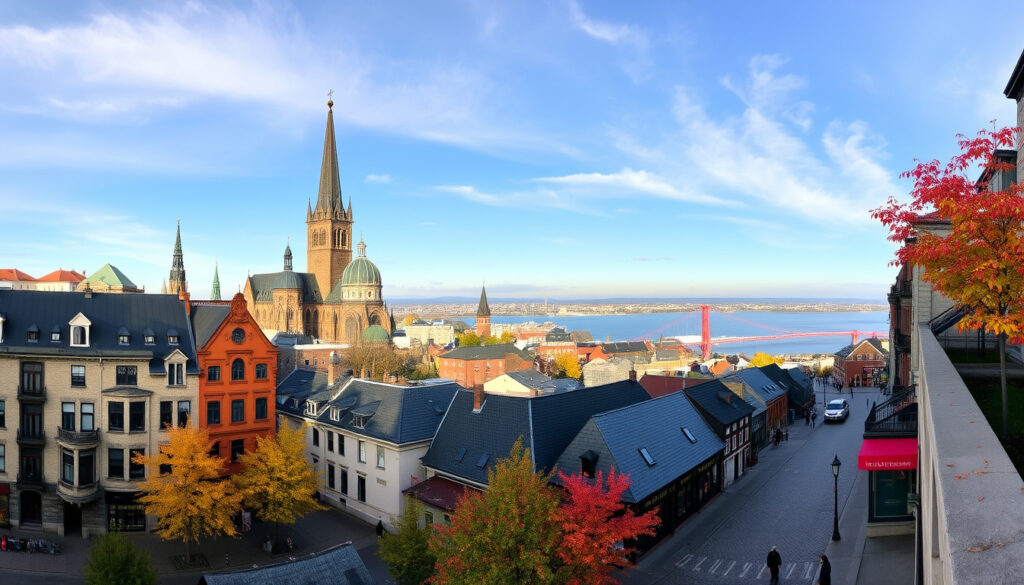
Things to Do in Montreal: Top Attractions & Itineraries
Few cities wear their personality quite like Montreal. From the cobblestone lanes of Old Montreal to the colorful murals of the Plateau, every neighborhood tells a different story, and Tourisme Montréal pitches it as a city of distinct neighborhoods like Old Montreal, the Plateau, Mile End, and the Quartier des Spectacles (Tourisme Montréal – Official Site). This guide breaks down the best things to do in Montreal, including budget planning and pre-trip tips.
Best time to visit: May to October for weather; winter for festivals (Tourisme Montréal Festivals) ·
Mount Royal Park: Free, open year-round (Tourisme Montréal) ·
Official language: French (predominant), English widely spoken
Quick snapshot
- Romantic Old Montreal strolls (Tourisme Montréal)
- Dinner at a French bistro (Tourisme Montréal)
- Couples spa day (Tourisme Montréal)
- Montreal Science Centre (Tourisme Montréal) (Space for Life)
- Parc La Fontaine (Tourisme Montréal) (Space for Life)
- Biodôme and Insectarium (Space for Life)
- Nightlife on Crescent Street (Tourisme Montréal) (MURAL Festival)
- Street art tours (MURAL Festival)
- Music festivals (Tourisme Montréal Festivals) (MURAL Festival)
- Mount Royal park (Tourisme Montréal)
- Old Montreal walking tour (Tourisme Montréal)
- Public markets (no purchase required) (Tourisme Montréal Budget)
Seven facts about Montreal, from founding to geography:
| Attribute | Value | Source |
|---|---|---|
| Country | Canada | Tourisme Montréal |
| Province | Quebec | Tourisme Montréal |
| Founded | 1642 by French colonists | Pointe-à-Callière Museum |
| Population (2021) | 1,762,949 (city); 4.3 million (metro) | Tourisme Montréal |
| Area | 431 km² (city) | Tourisme Montréal |
| Official language | French | Tourisme Montréal |
| Time zone | EST (UTC-5); EDT in summer | Tourisme Montréal |
What should you not miss in Montreal?
Montreal’s must-see list is short and dense. The official tourism site, Tourisme Montréal, groups attractions by neighborhood, and three areas come up repeatedly for first-time visitors.
Notre-Dame Basilica and Old Montreal
- Notre-Dame Basilica is a must-see landmark (Notre-Dame Basilica of Montreal)
- Old Montreal offers cobblestone streets and historic architecture (Tourisme Montréal)
- Bonsecours Market and Château Ramezay Museum are within walking distance (Marché Bonsecours, Château Ramezay)
Notre-Dame Basilica charges admission, but the ornate interior – including the largest Casavant Frères organ in Canada – justifies the ticket. Old Montreal itself is free to wander and is the natural starting point for any.
The implication: budget at least half a day for this district, and buy basilica tickets online to avoid queues.
Mount Royal Park and the View
- Mount Royal provides panoramic city views (Tourisme)
- The park is free and open year-round (Tourisme Montréal)
Designed by Frederick Law Olmsted (the same landscape architect behind New York’s Central Park), Mount Royal Park is the city’s green lung. A 30-minute climb up the main trail rewards you with a skyline that includes the Olympic Stadium and the St. Lawrence River. In winter, the park transforms into a cross-country ski and snowshoe destination.
The catch: the park is free, but parking is limited – take the metro to Mont-Royal station and walk.
Plateau Mont-Royal neighbourhood
- Plateau district is known for colorful murals and trendy cafés (Tourisme Montréal)
- MURAL Festival adds seasonal street art (MURAL Festival)
The Plateau is where Montreal’s creative energy lives. Walk along Saint-Laurent Boulevard to spot murals, then duck into a café on Laurier Avenue. This neighborhood also hosts the annual MURAL Festival, which paints new works on building facades each summer.
Why this matters: the Plateau is best explored on foot – allow two hours for a casual stroll, more if you stop for coffee or lunch at a local bistro.
Jean-Talon Market and food scene
- Jean-Talon Market is one of North America’s best public markets (Tourisme Montréal)
Jean-Talon Market in Little Italy is a sensory overload in the best way. Fresh produce, cheeses, meats, and flowers fill the stalls. Try a smoked-meat sandwich at a nearby deli or grab a bagel from a St-Viateur bagel shop. The market is free to enter, though purchases add up.
The pattern: budget $15–$20 per person for a market meal. For a deeper dive, consider a guided food tour.
Old Montreal, Mount Royal, the Plateau, and Jean-Talon Market together capture Montreal’s essence for first-time visitors.
Is 3 days enough to see Montreal?
Three days allows a relaxed pace covering major attractions, according to Tourisme Montréal. The following itinerary clusters attractions by geography to minimize transit time.
Day 1: Old Montreal and Downtown
- Day 1 includes Old Montreal, Notre-Dame, and the Old Port (Tourisme Montréal)
- Morning: Notre-Dame Basilica (allow 1.5 hours)
- Afternoon: Old Port walking tour, Bonsecours Market, Château Ramezay
- Evening: dinner in the Quartier des Spectacles
Start at Place d’Armes, then walk to the basilica. Afterward, head south to the Old Port for waterfront views. The area is compact – everything is within a 15-minute walk.
Transit cost: $0 if you walk from your hotel; otherwise, a single STM metro ride costs $3.75 (Société de transport de Montréal (STM)).
Day 2: Museums and Neighbourhoods
- Day 2: visit Museum of Fine Arts, Plateau, and Mile End (Montreal Museum of Fine Arts)
- Morning: Montreal Museum of Fine Arts ($24 adult admission)
- Afternoon: Plateau and Mile End walking tour
- Evening: bagel tasting on Fairmount Avenue
The Museum of Fine Arts is one of Canada’s largest art museums and frequently hosts international exhibitions. After the museum, take the metro to Laurier station and walk south through the Plateau. Mile End, just west of the Plateau, is home to bagel shops.
Day 3: Nature and Day Trips
- Day 3: Mount Royal hike, Jean-Talon Market, or a trip to Mont-Tremblant (Tourisme Montréal)
- Option A: Morning hike up Mount Royal, afternoon at Jean-Talon Market, evening in Little Italy
- Option B: Full-day trip to Mont-Tremblant (requires car or bus, 1.5 hours north)
For nature lovers, a Mount Royal hike and market lunch make a relaxed final day. If you have access to a car, Mont-Tremblant offers skiing in winter and hiking in summer.
Three days covers the essentials but sacrifices day trips to places like Quebec City or the Eastern Townships. For a deeper stay, extend to five days.
For most visitors, three days provides a solid introduction to the city’s highlights.
Is Montreal worth visiting?
Montreal offers a unique blend of European and North American culture, says Tourisme Montréal. The city hosts major festivals like Just for Laughs and Montreal International Jazz Festival (Tourisme Montréal). But there are trade-offs.
Upsides
- Rich cultural scene – festivals, museums, music year-round (Tourisme Montréal)
- Food scene – bagels, poutine, smoked meat, and international cuisine (Tourisme)
- Affordable compared to Toronto or Vancouver – lower hotel and dining costs (Tourisme Montréal)
- Walkable downtown core and excellent public transit (STM)
Downsides
- Winter cold – average January high of -6°C (21°F) (Tourisme Montréal)
- Language barrier – French is official, though English is widely understood in tourist areas
- Seasonal events – summer festivals spike hotel prices (Tourisme Montréal)
- Construction – ongoing road work and metro closures can disrupt plans
The verdict: Montreal is absolutely worth visiting, especially for culture and food enthusiasts. The best value comes in shoulder seasons (May–June and September–October) when weather is pleasant and prices are lower. For winter lovers, February’s Montréal en Lumière festival offers a world-class indoor/outdoor event.
Which is nicer, Toronto or Montreal?
Both cities have strong appeal, but they cater to different travel styles. The comparison below uses official tourism sources and cost data.
Four dimensions, one pattern: Montreal leans European and intimate; Toronto leans cosmopolitan and sprawling.
| Aspect | Montreal | Toronto |
|---|---|---|
| Vibe and atmosphere | European charm, artsy, walkable (Tourisme Montréal) | Cosmopolitan, diverse, fast-paced (Tourisme Montréal) |
| Cost of living (visitor) | Lower – average hotel $150–$200/night | Higher – average hotel $200–$300/night |
| Attractions | Old Montreal, Mount Royal, festivals | CN Tower, Royal Ontario Museum, theatre district |
| Food scene | Bagels, poutine, smoked meat, French bistro | Diverse international cuisine |
Cost data for hotels based on average prices from major booking platforms; Montreal is generally 20–30% cheaper for comparable accommodations.
The catch: if you prefer a quieter, more intimate city with a strong identity, Montreal wins. If you want endless dining options and a big-city energy, Toronto is the choice.
Is $100,000 a good salary in Montreal?
For travelers considering relocation, Montreal’s cost of living is attractive. The median household income in Montreal is around $75,000 CAD, according to income data from Tourisme Montréal (general city economic profile). A $100,000 CAD salary is considered comfortable for a single person.
- Average rent for a one-bedroom apartment: $1,500–$1,800 CAD per month (Tourisme Montréal)
- Montreal has higher provincial income tax but lower housing costs than Toronto or Vancouver
- Middle-class income in Quebec: approximately $55,000–$110,000 CAD (Tourisme Montréal)
For a family of four, $100,000 may be tighter, but still above the metro area’s typical household income. The key advantage is housing affordability – Montreal’s average home price is roughly half of Toronto’s.
What this means: a $100,000 salary provides a comfortable urban lifestyle in Montreal, with room for savings and travel, especially if you live in less central neighborhoods.
Confirmed facts and what remains unclear
Confirmed facts
- Notre-Dame Basilica is open to visitors (ticket required) (Notre-Dame Basilica of Montreal)
- Mount Royal park is open year-round (Tourisme Montréal)
- Montreal has four distinct seasons (Tourisme Montréal)
- French is the official language
- Public transit (STM) operates bus and metro (Société de transport de Montréal (STM))
What’s unclear
- Exact best time to visit is subjective – depends on preference for winter festivals or summer warmth
- Whether 3 days is ‘enough’ depends on travel style and interests
uls>
These facts provide a reliable baseline for trip planning.
What locals say
“Montreal is Canada’s most European city, but it’s got a raw energy you don’t find in Europe. The mix of old stone buildings and modern street art is what keeps me here.”
“If you’re visiting for the first time, ignore the urge to see everything. Spend a full afternoon just wandering Old Montreal and another in the Plateau. That’s where the real Montreal lives.”
– mountaineer interview for NorthReview
For a traveler seeking culture, food, and walkability without the price tag of Toronto or Vancouver, Montreal delivers. The city’s neighborhoods reward slow exploration, and its festivals give even winter a reason to visit. The decision is clear: book three days, bring comfortable shoes, and leave room for a second bagel.
eternalarrival.com, getyourguide.com, youtube.com, thisremotecorner.com, perfectdaysomewhere.com, neverendingfootsteps.com
For a detailed breakdown of costs and itineraries, check out things to do in Montreal for comprehensive travel tips.
Frequently asked questions
What is the best area to stay in Montreal?
Old Montreal for charm and walkability, Plateau for local vibe, Downtown for convenience and business travel.
Do I need to speak French in Montreal?
No, especially in tourist areas. English is widely understood. Learning a few French phrases is appreciated but not required.
Is Montreal safe for solo travelers?
Yes, Montreal is generally safe. Standard urban precautions apply. The Plateau and Old Montreal are particularly welcoming for solo visitors.
What is the legal drinking age in Quebec?
18 years old, which is younger than in the rest of Canada (19 in Ontario and British Columbia).
Can I use Uber in Montreal?
Yes, Uber operates throughout Montreal. STM metro and bus are often faster for central routes. BIXI bikes are also available for short trips.
Are Montreal museums free on certain days?
Yes, the Montreal Museum of Fine Arts offers free admission on the first Sunday of the month. Pointe-à-Callière has free admission on the first Saturday of the month (Pointe-à-Callière Museum).
How do I get from Montreal airport to downtown?
The 747 express bus runs 24/7 from YUL Montreal-Trudeau Airport to downtown for $10 CAD (includes STM metro and bus access for 24 hours). Taxis cost $40–$50 CAD.
Related reading
More related posts
 Jimmy Smits: Ethnicity, Height, Career & Current Work
 Hayden Christensen: What Happened to the Star Wars Actor
 Miss Rachel: Biography, Net Worth, Family, Key Questions
 ClassDojo Review: What It Does, Cost, Negatives & How to Get It
 Le Sac de chips: Quebec’s Viral News Brand Explained
 Regis Philbin: Cause of Death, Irish Roots & Career
 Golden State Warriors vs Chicago Bulls Match Player Stats & Box Score
 Hotel d’Affaires Fort St John: Reviews & Deals