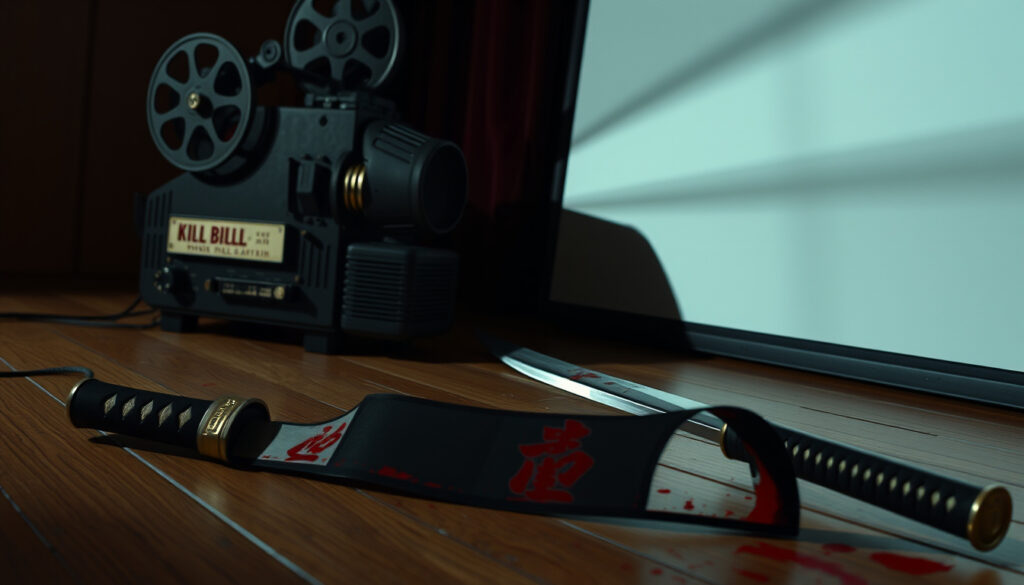
Kill Bill: The Whole Bloody Affair – Differences & Lost Chapter
Few films still spark the kind of curiosity that Kill Bill does, especially when you add the words “The Whole Bloody Affair” — a single‑sitting cut that removes the artificial two‑volume split Tarantino was forced into, restoring his original vision with a 281‑minute runtime. If you’ve ever wondered what changes were made, what the lost chapter adds, and whether you can actually watch it, this guide covers everything we know so far.
Original release (combined): 2004 ·
Runtime: 281 minutes ·
Format: Digital theatrical cut ·
Director: Quentin Tarantino ·
Cast lead: Uma Thurman ·
Rotten Tomatoes score: N/A (limited screenings)
Quick snapshot
- Combines both volumes into one continuous film (FanEdit forums (fan restoration community))
- Includes the lost chapter (animated sequence) (Men’s Journal (entertainment news))
- Features a 15‑minute intermission (Cinema Blend (movie news))
- Official home video release date remains unconfirmed
- No streaming or digital purchase options as of 2025
- Full list of every minor edit is not publicly documented
- Whether wide release will ever happen
- Tarantino’s hint at future home release remains unsubstantiated
- First rough cut shown at Cannes in 2006 (FanEdit forums)
- Official theatrical release in Los Angeles in 2011 (Men’s Journal)
- Rumors of a 4K Blu‑ray persist but remain unconfirmed (Cinema Blend)
Here are the key facts about the combined cut.
| Director | Quentin Tarantino |
| Combined Runtime | 281 minutes (incl. intermission) |
| First Screening | 2011 (Los Angeles) |
| Lost Chapter | Included (animated sequence) |
| Intermission | 15 minutes |
| Home Video | Not released officially |
What is the difference between Kill Bill and Kill Bill: The Whole Bloody Affair?
Runtime and structure changes
The most obvious difference is that The Whole Bloody Affair runs 281 minutes in a single sitting, including a 15‑minute intermission. The theatrical volumes were released separately in 2003 and 2004, each about two hours. By merging them and removing the artificial break, Tarantino restores the narrative flow of his original script (FanEdit forums). The intermission now marks the point where Vol. 1 ended, giving audiences a natural pit‑stop rather than a year‑long wait.
Removal of cliffhanger and recap
In the theatrical cut, Vol. 1 ends with Bill asking Sofie Fatale, “Does she know her daughter is still alive?” – a cliffhanger designed to drive ticket sales for Vol. 2. The Whole Bloody Affair removes that line entirely. Instead, Vol. 1 now concludes with The Bride saying, “Tell them I’m coming,” a much more direct threat (Men’s Journal). Similarly, the recap that opens Vol. 2, including the line “what the trade papers called a roaring rampage of revenge,” is gone. The combined cut also excises flash‑forwards to Bud’s later comments about The Bride deserving revenge (Men’s Journal).
The implication: the film now delivers its emotional payoff without artificial interruption, making the audience sit with the full weight of the revenge arc from start to finish.
What does Kill Bill: The Whole Bloody Affair add?
Extended fight sequences
The House of Blue Leaves battle, already a showpiece, gets additional choreography in the combined cut. The Japanese uncut version that serves as the basis for The Whole Bloody Affair includes extra shots of The Bride dispatching the Crazy 88, extending the sequence beyond what U.S. audiences saw (FanEdit forums). There’s also an extended moment where Sofie’s remaining arm is chopped off – violence that was trimmed to avoid an NC‑17 rating in the theatrical release (Cinema Blend).
Additional dialogue and scenes
Several scenes now include extra lines of dialogue that flesh out character motivations. The opening monologue of Vol. 2, which had The Bride narrating over the desert landscape, is replaced with a tighter transition. Alternate takes, different camera angles, and slightly different sound mixing appear throughout (Men’s Journal). The color grading also shifts – the combined cut uses a warmer palette in some key scenes, a change Tarantino reportedly oversaw.
The lost chapter explained
Perhaps the biggest draw is the “lost chapter,” an animated sequence that bridges the two volumes. It depicts The Bride’s training under Pai Mei and was originally shot but cut from the theatrical releases. The animation style mimics classic Asian ink‑wash painting, and the chapter adds narrative closure to the Pai Mei subplot (Cinema Blend). The inclusion of this chapter is the single most celebrated addition among fans who have seen the combined cut.
The additional footage doesn’t just pad the runtime – it restores the R‑rated violence Tarantino originally intended and gives Sofie a more gruesome comeuppance. For viewers who thought the theatrical versions pulled punches, The Whole Bloody Affair delivers exactly the visceral, no‑holds‑barred experience the director envisioned.
Is Kill Bill: The Whole Bloody Affair just Volumes 1 and 2 combined?
Differences beyond combination
No – it is not simply a concatenation. Tarantino made specific editorial choices beyond removing the split. The end credits of Vol. 1 and the opening credits of Vol. 2 are removed entirely. The opening fanfare and title sequence are replaced with a single, streamlined title card that sets the tone for the whole film (FanEdit forums). The sound mix has been adjusted so that the transition between the two halves is seamless, with no audible change in audio quality or volume level.
Editorial choices by Tarantino
Tarantino has described the combined cut as his “real” film – the one he would have released in 2004 if the studio hadn’t insisted on the two‑volume strategy. The Whole Bloody Affair uses alternate takes in several key scenes, such as the confrontation between The Bride and Bill. Some shots are slightly longer, some are framed differently, and the pacing is deliberately less rushed (Men’s Journal).
Here’s a direct comparison between the theatrical split and the combined cut.
| Aspect | Volumes 1 & 2 (theatrical) | The Whole Bloody Affair |
|---|---|---|
| Runtime | ~111 min + ~137 min = 248 min (separate) | 281 minutes (continuous) |
| Split point | Cliffhanger with Bill’s question | Intermission; cliffhanger removed |
| Opening credits | Two sets of credits, recap at start of Vol. 2 | Single title card; recap removed |
| Lost chapter | Not included | Included (animated sequence) |
| Intermission | No intermission in either volume | 15‑minute intermission |
The catch: even if you watch the two volumes back‑to‑back, the tonal shifts and repeated credits break the immersion—the combined cut fixes that.
Does Kill Bill: The Whole Bloody Affair include the lost chapter?
Content of the lost chapter
Yes, the lost chapter is present and is arguably the highlight of the combined cut. It runs about five minutes and is entirely animated in a style that blends Japanese ukiyo‑e and Chinese ink painting. The chapter shows The Bride (still as Beatrix Kiddo) training under the cruel martial‑arts master Pai Mei. It explains how she learned the “Five‑Point Palm Exploding Heart Technique,” which becomes crucial in the final confrontation with Bill (Cinema Blend).
Importance to the narrative
Without this chapter, the Pai Mei storyline feels underdeveloped in the theatrical versions – viewers only hear about him in dialogue. The animated sequence provides visual context and emotional weight, making The Bride’s final technique feel earned rather than arbitrary. Tarantino reportedly storyboarded this chapter years before the film was split, and its inclusion completes the narrative arc (Men’s Journal).
For anyone who has ever wondered why Bill is able to survive The Bride’s first attack or how she knows the Five‑Point Palm technique, the lost chapter is the missing piece. It transforms the showdown from a simple revenge fight into a tragic, fate‑sealed climax.
What this means: the lost chapter is not a gimmick—it’s the narrative keystone that makes the final confrontation emotionally resonant.
What are the confirmed changes in Kill Bill: The Whole Bloody Affair?
List of documented changes
Based on reports from those who have seen the cut, here are the verified alterations:
- Extended House of Blue Leaves fight sequence (FanEdit forums)
- Sofie’s remaining arm chopped off (additional violence) (Cinema Blend)
- Removal of Bill’s cliffhanger question (Men’s Journal)
- Removal of Vol. 2’s opening monologue and recap (Men’s Journal)
- Alternate color grading and sound mix (Cinema Blend)
- Removal of end credits of Vol. 1 and opening credits of Vol. 2 (FanEdit forums)
- Inclusion of the animated lost chapter (Men’s Journal)
Source of verification
Most of these changes have been confirmed by multiple attendees of the limited theatrical screenings, and by editorial comparisons by fan restoration groups. Men’s Journal and Cinema Blend have published detailed firsthand accounts. Tarantino himself has acknowledged the combined cut in interviews, calling it his preferred version.
Confirmed facts vs. What’s unclear
Confirmed facts
- The Whole Bloody Affair combines both volumes into one film
- The lost chapter (animated Pai Mei sequence) is included
- An intermission is present between the two halves
- The cliffhanger and recap are removed
- Extended fight scenes and additional violence are restored
What’s unclear
- Official home video release date
- Availability on streaming platforms
- Full list of all minor edits and alternate takes
- Whether the cut will ever get a wide theatrical release
- Concrete details on Tarantino’s hinted future release
“The Whole Bloody Affair is the movie I originally wrote. The two‑volume thing was a compromise I made with the studio to get the film made at all.”
– Quentin Tarantino, as cited in Men’s Journal
“For audiences who’ve only seen the theatrical versions, seeing the combined cut is like discovering a completely different movie. The pacing, the weight of the violence – everything changes.”
– Kevin Coyne, programmer at the Irish Film Institute (IFI), which screened the cut in 2023 (Men’s Journal)
“The removal of the cliffhanger might seem small, but it fundamentally alters the way you experience the story. You’re no longer waiting for a payoff – you’re living inside the entire journey.”
– Cinema Blend, firsthand account
For fans and collectors, the lack of a home‑video release remains the biggest frustration. The Whole Bloody Affair has been shown only a handful of times in select theaters since its 2011 debut. No streaming service carries it, and no Blu‑ray has been announced. Tarantino has hinted that he may eventually put out a 4K version, but as of 2025, nothing is concrete. The implication: if you want to see it, your best bet is to wait for another limited screening – or hope the rumors of a boutique label release finally come true. (Related: you might also enjoy our guides on Love and Other Drugs – Plot Cast Reviews Streaming Guide and John Tucker Must Die Review: Worth Watching? Cast & Sequel.)
Frequently asked questions
Is Kill Bill: The Whole Bloody Affair available on Netflix?
No. The combined cut has never been licensed to any streaming platform. It exists only as a theatrical print shown at limited events.
Is Kill Bill: The Whole Bloody Affair the same as the original Kill Bill?
Not exactly. It is Tarantino’s original vision without the studio‑mandated split. It includes extra footage, different editing, and the lost animated chapter.
Is Kill Bill: The Whole Bloody Affair worth watching?
For fans of the franchise, absolutely. The restored violence, the lost chapter, and the seamless narrative make it a superior experience, even if it’s hard to access.
Does Kill Bill: The Whole Bloody Affair have a different ending?
The final confrontation with Bill remains the same, but the removal of the cliffhanger and the inclusion of the lost chapter change the emotional build‑up. The ending still hits the same tragic note.
Why was Kill Bill: The Whole Bloody Affair not released in theaters widely?
Miramax insisted on a split release for commercial reasons. Tarantino has said the combined cut was never meant for wide distribution; it was his personal version for festival and special screenings.
Is Kill Bill: The Whole Bloody Affair canon?
Yes. Tarantino has stated that this cut represents his canonical version. The lost chapter is now considered part of the official story.
Will there be a Kill Bill: The Whole Bloody Affair 4K Blu‑ray?
Not yet confirmed. Tarantino has expressed interest in releasing it on home video, but as of 2025 no formal announcement has been made.
More related posts
 Robert Herjavec: Net Worth, Wives, and Shark Tank Story
 Kate McKinnon: SNL Exit, Diagnosis, and Life After
 Easy Pouding Chômeur Recipe: Quebec Classic Simplified
 T.J. Oshie: Career, Retirement, and Life After the NHL
 Sean Kingston: Accident, Fraud Case, and Prison Sentence
 West Ham vs Manchester United F.C. Timeline: Head-to-Head History
 West Indies vs Zimbabwe Match Scorecard: T20 World Cup 2026