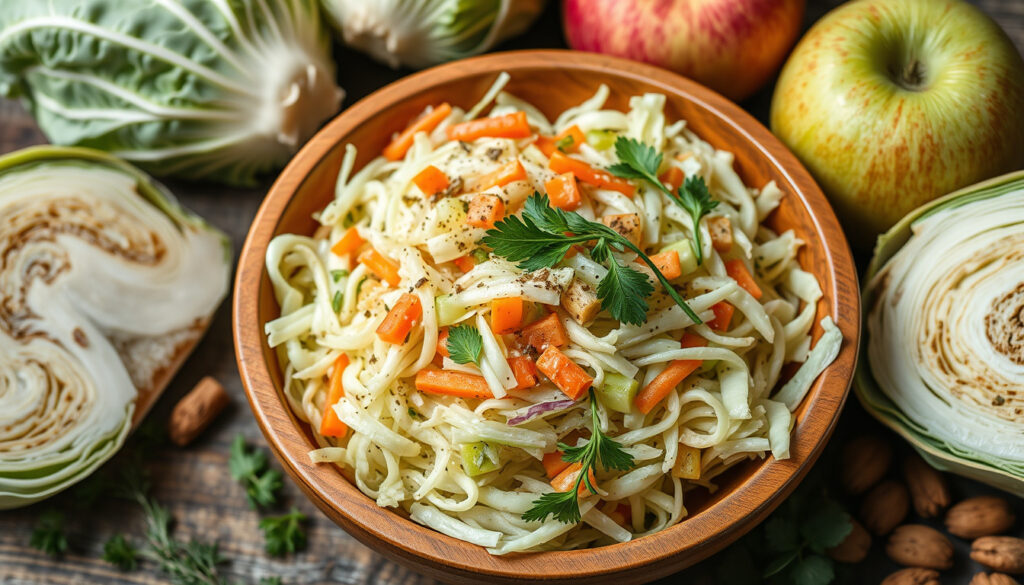
Cabbage Salad Recipe: Traditional & Variations Guide
Few recipes have held their ground at Quebec tables as stubbornly as the cabbage salad — and for good reason. Whether you’re chasing the tangy bite of a traditional vinaigrette or the creamy richness of St-Hubert style, this is the kind of side that disappears first at the barbecue. The recipes below come from the region’s most trusted culinary sources, with exact measurements you can actually follow.
Core ingredients: Cabbage, vinegar, oil, sugar · Typical cabbage size: 2 kg · Prep additions: Onion salt, parsley, green onions · Sweetener amount: 15–20 ml · Acid component: 60 ml vinegar
Quick snapshot
- Traditional dressing uses 60 ml vinegar to 90 ml oil (5 Ingredients 15 Minutes)
- St-Hubert creamy version contains egg and mustard allergens (St-Hubert Official Products)
- Precise origin date of St-Hubert coleslaw product line launch
- Shelf life data for commercial products not publicly disclosed
- Recipes from Ricardo Cuisine and St-Hubert represent current market standards
- Télé-Québec blanching technique suggests professional-grade refinement
- Growing interest in make-at-home versions of restaurant classics
- Regional variations (Vietnamese, French) gaining visibility online
The five most-searched cabbage salad variations share a common backbone: shredded cabbage, a balanced dressing, and whatever fresh herbs or add-ins your region prefers. Here’s how the measurements break down across top sources.
| Measurement | Value | Source |
|---|---|---|
| Standard cabbage weight | 2 kg | Ricardo Cuisine |
| Vinegar quantity | 60 ml | 5 Ingredients 15 Minutes |
| Oil quantity | 60 ml (traditional) / 90 ml (St-Hubert style) | 5 Ingredients 15 Minutes |
| Sugar quantity | 15–20 ml | 5 Ingredients 15 Minutes |
| Mayo in St-Hubert creamy | 125 ml | 5 Ingredients 15 Minutes |
| Commercial package size | 454 g | St-Hubert Official Products |
What is the traditional cabbage salad recipe?
The classic Quebec cabbage salad starts with about 2 kg of cabbage, shredded fine, then dressed with a simple vinaigrette. Ricardo Cuisine’s traditional recipe calls for 20 minutes of prep time and one hour of refrigeration before serving. The yield comes to roughly 1.5 liters (6 cups), which is enough for a family gathering or a week of lunches.
Ingredients list
- 2 kg cabbage, finely shredded
- 60 ml white wine vinegar
- 15–20 ml sugar
- 60 ml canola oil
- 2.5 ml garlic powder
- 2.5 ml onion powder
- Salt to taste
- Fresh parsley and green onions
Step-by-step preparation
- Remove outer leaves from cabbage and quarter the head. Shred finely using a mandoline or food processor.
- Place shredded cabbage in a large bowl and sprinkle lightly with salt. Let sit for 10 minutes to draw out moisture, then squeeze dry.
- Whisk together vinegar, sugar, oil, garlic powder, and onion powder until sugar dissolves.
- Pour dressing over cabbage and toss thoroughly to coat every strand.
- Add chopped parsley and green onions. Toss again.
- Cover and refrigerate for at least 1 hour. The flavor develops as it sits.
St-Hubert variation
The St-Hubert style version has become a benchmark for Quebec home cooks. 5 Ingredients 15 Minutes provides a homemade adaptation that closely mirrors the restaurant’s traditional product, which contains canola oil, water, vinegar, sugar, salt, sodium erythorbate, spices, potassium sorbate, garlic powder, and onion powder according to St-Hubert’s official product listing.
- 90 ml canola oil (slightly more than traditional)
- 60 ml white wine vinegar
- 20 ml sugar
- 2.5 ml garlic powder
- 2.5 ml onion powder
- 8 cups shredded cabbage
- 1 large grated carrot
The St-Hubert traditional product comes in 454-gram containers and uses a vinaigrette base rather than mayo, making it lighter than its creamy counterpart. Serves 8 to 10 portions in about 15 minutes of prep time.
The difference between traditional vinaigrette (60 ml oil) and St-Hubert style (90 ml oil) might seem small, but it changes the mouthfeel substantially. More oil means the salad stays moist longer and the flavors meld faster.
What are the ingredients for cabbage salad recipe?
The core of any cabbage salad is simple: cabbage, acid, fat, and sweetener. But the regional variations tell a more interesting story. 5 Ingredients 15 Minutes specifies the exact metric measurements that Quebec home cooks rely on.
Core cabbage and dressing
- Cabbages vary by type: green cabbage for longevity, napa cabbage for Asian preparations, red cabbage for color
- Vinaigrette ratio: 3 parts oil to 1 part acid (vinegar) is the standard baseline
- Sugar balances the acidity — 15–20 ml per 2 kg cabbage is typical
Common add-ins
- Fresh herbs: parsley and green onions are traditional in Quebec versions
- Vegetables: carrots (grated) appear in most St-Hubert-style recipes
- Seasonings: onion salt, garlic powder, black pepper
Regional specifics
- Vietnamese: Rice vinegar, nuoc mam (fish sauce), fresh cilantro, toasted peanuts, chilies
- French: Walnuts, cheese (Roquefort or similar), cured ham, Dijon mustard in dressing
- St-Hubert style: Garlic powder, onion powder, slightly higher oil ratio, sometimes dry mustard added
The Vietnamese variation breaks from the Quebec standard most dramatically. Instead of sugar-heavy vinaigrette, it relies on the balance between fish sauce, rice vinegar, lime juice, and a touch of sugar. Chef Cuisto notes that even the creamy versions benefit from a 4-hour refrigeration before serving, which allows the dressing to penetrate the cabbage strands.
Red cabbage turns blue-gray when cooked or when exposed to alkaline substances. If your water is heavily chlorinated, the color may shift unexpectedly. Use filtered water when blanching red cabbage.
What is the red cabbage salad recipe?
Red cabbage brings visual drama and a slightly peppery flavor that contrasts with green cabbage’s mildness. Marmiton’s reference recipe pairs red and white cabbage for a two-tone effect that looks impressive on the table.
Red vs white cabbage
- Red cabbage contains anthocyanins — the pigment that gives it color — which also makes it slightly more bitter
- White (green) cabbage has a higher water content and shreds softer
- Combining both gives you visual appeal and flavor complexity
Marmiton red and white mix
- 1 small red cabbage, finely shredded
- 1 small white cabbage, finely shredded
- 60 ml olive oil
- 30 ml white wine vinegar
- 10 ml Dijon mustard
- 15 ml honey or sugar
- Salt and pepper to taste
Vinaigrette options
- Classic: Oil, vinegar, salt, pepper — keep it simple
- Mustard-forward: Add Dijon to help the vinaigrette emulsify
- Fruity: Replace some vinegar with apple cider or add dried cranberries
The key to red cabbage salad is letting it rest after dressing. The color bleeds into the white cabbage over time, creating a pink-marbled effect that’s actually quite attractive. Serve within 2–3 hours for the best texture, as red cabbage can turn soggy if left too long.
“The color bleed from red into white cabbage over a few hours creates a visual effect that guests consistently notice. That’s the kind of detail that makes a recipe memorable.”
— Josée di Stasio, Ricardo Cuisine editorial
What is the Vietnamese cabbage salad recipe?
Vietnamese cabbage salad, often called gỏi cải or nộm, represents a completely different flavor profile from the Quebec standard. La Petite Cuisine de Nat highlights the essential difference: nuoc mam (fish sauce) as the umami backbone and rice vinegar for brightness without the sweetness of sugar.
Key Asian flavors
- Nuoc mam: fermented fish sauce, the cornerstone of Vietnamese cuisine
- Rice vinegar: milder acidity than Western vinegars, with a subtle sweetness
- Lime juice: provides citrus brightness and helps the flavors bloom
- Fresh herbs: cilantro, mint, Thai basil
Preparation steps
- Shred cabbage very fine — Vietnamese salads use a finer cut than Western versions
- Make the dressing: mix 2 tablespoons nuoc mam, 1 tablespoon rice vinegar, 1 tablespoon lime juice, 1 teaspoon sugar, and a pinch of chili
- Toss cabbage with dressing and let sit for 5 minutes
- Top with crushed peanuts, fresh cilantro, and crispy shallots
Sauce components breakdown
- Fish sauce: adds depth and saltiness without the vinegary bite
- Rice vinegar: 4–5% acidity, gentler than white wine vinegar
- Sugar: small amount to balance the salt from fish sauce
- Chili: typically bird’s eye or Thai chili, adjust to heat preference
The Vietnamese approach creates a lighter, more refreshing salad than the Quebec versions. It’s eaten the same day it’s made, as the cabbage doesn’t hold up well overnight. For a heartier variation, add grilled chicken or shrimp.
Traditional Vietnamese cabbage salad uses fish sauce and fresh chilies, making it unsuitable for vegan diets or those with shellfish allergies. Substituting soy sauce and bell pepper can approximate the flavor without the animal products.
What is the St-Hubert style cabbage salad recipe?
St-Hubert is to Quebec what Heinz is to American ketchup — a ubiquitous brand that defines a category. The restaurant chain’s creamy coleslaw has become so iconic that home cooks routinely try to replicate it. 5 Ingredients 15 Minutes provides a detailed homemade version that captures both the traditional vinaigrette and creamy styles.
Mayo-based dressing
- 125 ml mayonnaise (the defining ingredient for creamy version)
- 45 ml white wine vinegar
- 20 ml sugar
- 2.5 ml dry mustard
- Optional: 5 ml Worcestershire sauce (Chef Cuisto’s addition)
Exact measurements
- 8 cups shredded cabbage (approximately 2 liters)
- 1 large grated carrot
- Prepare dressing separately, then combine with vegetables
- Refrigerate for at least 4 hours before serving (Chef Cuisto recommends this)
Serving tips
- St-Hubert traditional product comes in 454-gram containers
- The creamy version is a source of vitamin A and a good source of vitamin C according to St-Hubert’s product nutrition information
- Both products contain egg and mustard allergens (important for dietary restrictions)
Télé-Québec’s Cuisinez program adds a professional touch with a brief blanching step: dip cabbage and onion in boiling water for 5 seconds, then cool immediately. This softens the raw crunch slightly and helps the dressing adhere better. Télé-Québec recommends pairing it with roasted or BBQ chicken, which is the classic St-Hubert serving suggestion.
“The creamy coleslaw at St-Hubert works because the dressing clings to every strand. The secret is letting it rest — that 4-hour refrigeration isn’t optional, it’s what makes the difference between good and great.”
— Chef Cuisto, chefcuisto.com
Related reading: Easy Pouding Chômeur Recipe: Quebec Classic Simplified
Traditional cabbage salads shine brighter when paired with techniques from cabbage slaw recipes, delivering the crisp mayo and vinegar profiles everyone craves.
Frequently asked questions
How long does cabbage salad last in the fridge?
Traditional vinaigrette versions keep 3–5 days in an airtight container. Creamy versions with mayonnaise should be consumed within 2–3 days. The cabbage softens over time, so the texture you start with won’t be the same after day two.
Can I make cabbage salad vegan?
Yes — replace the mayo in creamy versions with vegan mayo or a tahini-based dressing. For the traditional vinaigrette version, ensure your vinegar is vegan (most are). Vietnamese versions using fish sauce can substitute soy sauce or coconut aminos.
What type of cabbage is best?
Green cabbage is the most versatile and has the longest shelf life. Napa cabbage works better for Asian-style salads and ferments faster. Red cabbage adds visual appeal but has a stronger, slightly bitter flavor. For a standard Quebec-style recipe, green cabbage is the traditional choice.
How to shred cabbage finely?
A mandoline gives the most uniform, paper-thin shreds. A food processor with the shredding blade works well for large batches. A sharp chef’s knife works too — slice the cabbage into thin rounds, then stack and cut into thin strips. Aim for strands no wider than 3mm for the best texture.
Is cabbage salad gluten-free?
The traditional cabbage salad recipe (cabbage, oil, vinegar, sugar) is naturally gluten-free. Check seasonings — some onion salts contain anti-caking agents that might contain gluten. St-Hubert’s commercial products list their ingredients online if you need to verify.
What substitutes for onion salt?
Use garlic salt, seasoned salt, or a combination of regular salt with dried minced onion. For a low-sodium version, use plain salt and add a small amount of dried onion flakes. The flavor difference is minimal for most recipes.
How spicy is Vietnamese version?
Traditional Vietnamese cabbage salad uses bird’s eye chili or Thai chili, which can be quite hot. One small chili per serving provides noticeable heat without being overwhelming. Remove the seeds to reduce the heat while keeping the flavor. Adjust to your heat tolerance — the recipe works fine with bell pepper as a completely non-spicy alternative.
For Quebec home cooks, the St-Hubert style creamy version remains the benchmark against which all other recipes are measured. Whether you go traditional (vinaigrette-based) or creamy (mayo-based), the critical steps are the same: shred fine, salt and rest the cabbage, mix dressing separately, and give it time in the refrigerator before serving.
More related posts
 Gabriela Dabrowski: Ranking, Partner, Split & Personal Life
 Does Eleven Die in Stranger Things? Season 5 Fate Explained
 Penticton Golf and Country Club – Membership Guide and Course Details
 Phillip Danault: Biography, Contract, Stats & Trade History
 Mookie Betts: Nationality, Health, and Meghan Markle Connection
 Jake Paul Ben Askren: Fight KO, Purse & Lung Donations
 Cuba Gooding Jr.: What Happened, Net Worth, Wife, Movies
 Kapil Sharma: Netflix Pay, Net Worth, Wives, Hair & Depression