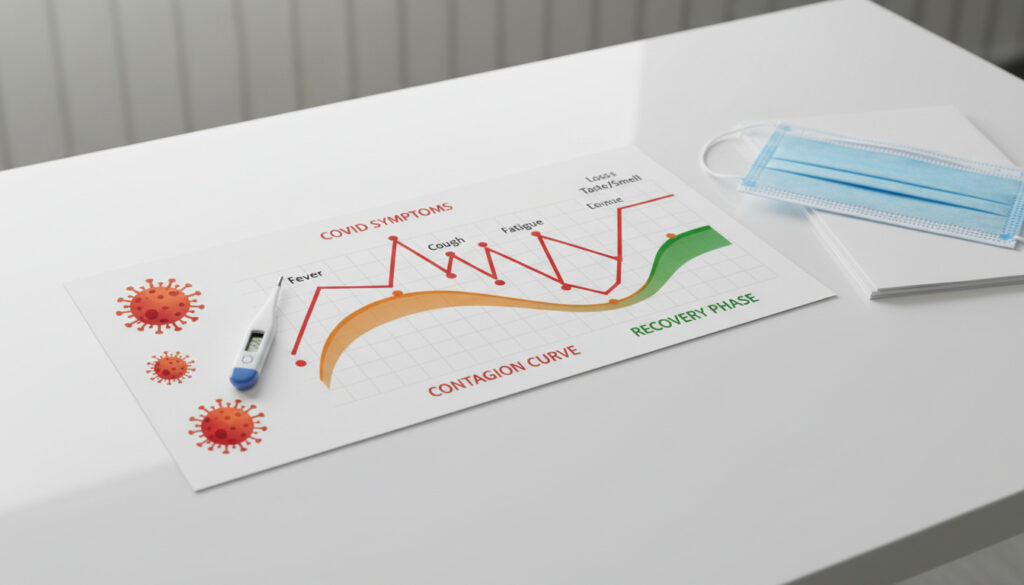
How Long Does Covid Last – Symptoms, Contagion & Recovery
COVID-19 typically runs its course within two weeks for most healthy adults, though the exact duration varies significantly based on severity, vaccination status, and individual immune response. While acute symptoms like fever and cough generally resolve within ten days, the period of contagiousness and complete recovery follow different timelines that have shifted with evolving variants and public health guidance.
Understanding these overlapping phases—from initial exposure through symptom resolution and return to normal activity—remains essential for individual decision-making and community protection. Current data from the Centers for Disease Control and Prevention and the World Health Organization indicates that while the virus operates on predictable biological patterns, personal experiences range widely from asymptomatic infections to prolonged disability.
How Long Do COVID-19 Symptoms Typically Last?
- Symptoms typically appear 2 to 14 days after exposure, with most people developing illness within 5 to 6 days
- Acute symptoms including fever, cough, and sore throat generally last up to 10 days for mild to moderate cases
- Fatigue and shortness of breath may persist for weeks or months even after other symptoms resolve
- Loss of taste and smell, when present, often requires additional weeks to return fully
- Vaccinated individuals typically experience shorter illness duration and reduced symptom severity
- Older adults and those with compromised immune systems face extended recovery periods
- Mayo Clinic research confirms symptom severity ranges from mild congestion to severe respiratory distress
| Illness Severity | Symptom Duration | Contagious Period | Total Recovery |
|---|---|---|---|
| Asymptomatic | None | Up to 10 days | 5-10 days |
| Mild (Vaccinated) | 3-7 days | 5-8 days | 1-2 weeks |
| Mild (Unvaccinated) | 5-10 days | 8-10 days | 2 weeks |
| Moderate | 7-14 days | Up to 10 days | 2-4 weeks |
| Severe/Critical | 2+ weeks | 20+ days | Months |
| Long COVID | 3+ months | Not contagious | Months to years |
How Long Are You Contagious with COVID?
Contagiousness begins 1 to 2 days before symptoms appear and extends through the first 8 to 10 days of illness for most people. Research tracking viral shedding shows that peak transmission risk occurs in the initial days surrounding symptom onset, when viral loads reach their highest concentrations.
When Are You Most Likely to Spread the Virus?
Individuals pose the greatest transmission risk during the 48 hours before symptoms develop and the first 3 to 5 days of active illness. Airborne transmission occurs readily during this window. Asymptomatic individuals also spread the virus, though typically for shorter durations than those with pronounced symptoms.
Current Isolation Guidelines
The CDC recommends isolating for at least 5 days from symptom onset or from the positive test date if asymptomatic. Release from isolation requires both improvement in symptoms and being fever-free for 24 hours without medication. Health departments emphasize that the 5-day minimum applies only when symptoms are improving; severe cases require longer isolation periods.
Individuals with severe illness or compromised immune systems may remain contagious for 20 days or longer. Johns Hopkins Bloomberg School of Public Health advises these populations to consult healthcare providers before ending isolation.
Post-Isolation Precautions
After completing the initial 5-day isolation period, continuing to wear a well-fitting mask for an additional 5 days reduces residual transmission risk. Avoiding travel and limiting contact with high-risk individuals during days 6 through 10 protects vulnerable populations from late-period viral shedding.
How Long Does It Take to Test Negative After Having COVID?
The timeline for testing negative varies substantially based on test type, viral load, and individual immune response. While some individuals clear the virus within 5 days, others continue testing positive on rapid antigen tests for 10 to 14 days or longer.
Rapid Antigen vs. PCR Testing
Rapid antigen tests typically turn negative within 7 to 10 days as viral loads drop below detectable levels. PCR tests remain sensitive to residual viral RNA for 30 days or more, meaning a positive PCR result does not necessarily indicate ongoing contagiousness. Cleveland Clinic guidance suggests that symptom improvement provides a more reliable indicator than repeated testing for determining when to resume normal activities.
Factors Affecting Test Persistence
Vaccination status, initial viral exposure level, and immune system strength all influence how quickly tests turn negative. Some individuals with robust immune responses clear the virus rapidly, while others shed detectable particles for weeks without remaining infectious.
Duration of COVID Variants and Long COVID
Omicron and Current Subvariants
Omicron strains generally produce shorter acute illness periods compared to earlier variants like Delta or Alpha. Most individuals infected with Omicron subvariants experience symptom resolution within 5 to 7 days. JN.1 and KP.2, emerging in late 2024, follow similar patterns though specific duration data remains under investigation.
Understanding Long COVID Duration
Long COVID, formally recognized as Post-COVID Conditions, involves symptoms persisting at least 3 months after the initial infection. CDC surveillance indicates that while many patients see improvement between 3 and 6 months, others experience symptoms for years. Over 200 symptoms have been reported, with fatigue, brain fog, and post-exertional malaise among the most common persistent complaints. Per a més informació sobre com alleujar el mal cervical, consulta millors coixins per al mal cervical.
Mayo Clinic specialists recommend pacing activities and avoiding post-exertional crashes rather than pushing through fatigue. Vaccination remains the most effective prevention strategy, reducing Long COVID risk even among breakthrough infections.
Natural immunity from infection typically wanes after 3 to 4 months. Medical experts recommend waiting 3 to 4 months after recovery before receiving updated vaccinations to optimize immune response.
What Is the Day-by-Day Recovery Timeline for COVID-19?
- Day 0: Infection occurs through exposure to respiratory droplets or aerosols
- Days 2-5: Incubation period; virus multiplies without symptoms
- Days 1-3 of symptoms: Fever, sore throat, and body aches peak; highest contagiousness
- Day 5: Earliest point to end isolation if symptoms improving and fever resolved for 24 hours
- Days 8-10: Contagiousness typically ends for mild cases; most symptoms resolve
- Week 2: Majority of mild cases fully recovered; some fatigue may persist
- Month 3: Evaluation threshold for Long COVID diagnosis if symptoms continue
What Is Definitively Known vs. Still Uncertain About COVID Duration?
Established Facts
- Contagiousness peaks 1-2 days before symptoms through day 5
- Standard isolation requires minimum 5 days for mild cases
- Long COVID defined as symptoms persisting 3+ months
- Vaccination reduces severity and Long COVID risk
- Acute symptoms typically resolve within 10 days
Remaining Uncertainties
- Exact duration for newest variants (JN.1, KP.2)
- Individual variation in viral clearance timelines
- Long-term prognosis for all Long COVID subtypes
- Duration of immunity in immunocompromised patients
- Why some vaccinated individuals develop Long COVID
How Has Understanding of COVID Duration Evolved?
Early pandemic guidance suggested 14-day quarantines based on initial observations of the original Wuhan strain. The emergence of Delta variants prompted adjustments to 10-day isolations, while Omicron’s shorter incubation period led to the current 5-day standard with subsequent masking. Nutritional support and general wellness practices have gained attention as adjuncts to medical recovery protocols.
Recognition of Long COVID developed gradually as patients reported persistent symptoms beyond acute infection. Initially dismissed as anxiety or unrelated illness, the condition gained medical validation in 2021 with formal diagnostic criteria. Current research focuses on immune system dysregulation and microclots as potential mechanisms for prolonged illness.
What Do Health Authorities Say About COVID Duration?
The CDC emphasizes that most people with COVID-19 experience mild illness and recover without medical intervention, though isolation remains critical to prevent community spread. The WHO classifies Long COVID as a distinct post-viral condition requiring specialized care and documentation. Both agencies stress that while averages provide useful benchmarks, individual recovery timelines vary based on age, underlying conditions, and vaccination status.
How Long Does COVID Last?
COVID-19 duration spans 5 to 14 days for acute illness in most cases, with contagiousness extending from 2 days before symptoms through day 8 or 10. While mild infections typically resolve within two weeks, Long COVID represents a distinct condition lasting three months or longer. Nutritional strategies like anti-inflammatory diets may support recovery, though vaccination status, age, and underlying health conditions remain the primary determinants of individual timelines.
Frequently Asked Questions
How long does mild COVID last?
Mild COVID typically lasts 5 to 10 days, with most people recovering within two weeks. Symptoms like cough and sore throat usually resolve first, while fatigue may persist longer.
Is COVID still contagious after 5 days?
Yes, COVID can remain contagious after 5 days, though risk decreases significantly. The CDC recommends continuing to mask through day 10. Those with severe illness may remain contagious for 20 days.
How long does COVID fatigue last?
COVID fatigue frequently lasts 2 to 3 weeks beyond other symptom resolution. Some patients experience exhaustion for months. Rest and activity pacing help manage post-viral fatigue.
How long to recover from COVID?
Full recovery from mild COVID typically occurs within 1 to 2 weeks. Moderate cases may require 2 to 4 weeks, while severe infections can take months.
How long does COVID last in the body?
The virus typically clears from the body within 10 days for mild cases, though PCR tests may detect genetic material for weeks. Contagiousness generally ends by day 8 to 10.
How long are you immune after COVID?
Immunity from natural infection lasts approximately 3 to 4 months. Vaccination extends protection, with experts recommending vaccination 3 to 4 months after recovery.
More related posts
 How to Lose Weight Fast: Tips, Foods & Safe Methods
 Who I Taylor Swift Dating? Travi Kelce & Full Hi tory
 Fisher Price Little People: Toys, Value & Buying Guide
 Gilles Villeneuve: Ferrari Legend, Crash, and Lasting Legacy
 Blue Mountain Guide: Locations, Coffee, and Ski Resorts
 What Does SMH Mean? Definition, Usage, and Examples
 Ron Perlman: Ethnicity, Wife, Height, and Career Facts
 Gracie Abrams: Biography, Paul Mescal, Parents & Facts