Water by Reverse Osmosis: Is It Good for You, Costs & More
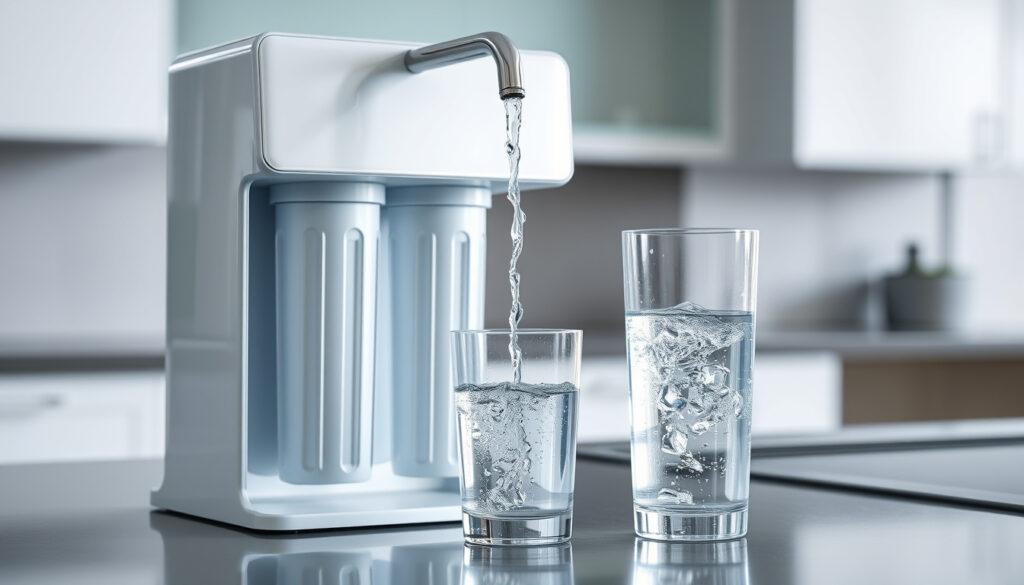
If you’ve been looking at water filters lately, reverse osmosis probably came up fast. It’s a filtration method that pushes water through an ultra-fine membrane to strip out dissolved salts, bacteria, and parasites — including the kind that ordinary chlorine disinfection cannot kill. For Irish households dealing with private boreholes or radon-risk areas, RO systems have become a serious option. Here’s what you actually need to know before spending any money.
Contaminant Removal: 99.9% · Stages in Typical System: 6 · Impurities Removed: Dissolved salts, harmful substances · Common Use: Under-sink drinking water
Quick snapshot
- Semi-permeable membrane process (Environmental ProTech)
- Removes 99.9% contaminants (Environmental ProTech)
- Used in under-sink systems (Environmental ProTech)
- Pure drinking water
- Removes salts and impurities
- Healthier for family
- Mineral stripping
- Waste water production
- Ongoing costs
- RO removes 99% of contaminants (iFilters)
- Membrane pores: 0.0001 microns (Environmental ProTech)
These specifications apply to most standard under-sink RO units sold in Ireland.
| Parameter | Value |
|---|---|
| Purification Method | Semi-permeable membrane |
| Removal Efficiency | 99.9% of contaminants |
| Typical Stages | 6-stage filtration |
| Primary Use | Drinking water systems |
Is reverse osmosis water good for you?
Reverse osmosis strips contaminants at the molecular level. The membrane pores measure just 0.0001 microns in diameter, which means Giardia cysts — ranging from 2 to 15 microns — have no chance of passing through (Environmental ProTech). That’s the parasite responsible for most waterborne illness outbreaks and, critically, it’s resistant to chlorine disinfection.
Health benefits
RO systems remove chlorine, fluoride, dissolved minerals, heavy metals, protozoan cysts, bacteria, and salts at 99% or better efficiency (iFilters). For families on private water supplies in Ireland — boreholes especially — that level of filtration addresses contamination sources ranging from agricultural runoff to animal activity near wells.
- Eliminates Giardia cysts and Cryptosporidium before they reach your glass
- Removes heavy metals including lead and mercury
- Produces water free of the taste and odour chlorine adds to mains supply
For Irish households with compromised source water — high radon areas, private boreholes, or history of boil notices — RO’s contaminant removal far outweighs the mineral loss. You can compensate through diet.
Potential drawbacks
The tradeoff is that RO doesn’t discriminate between harmful contaminants and dissolved minerals your body needs. Trace calcium, magnesium, and potassium get filtered out along with the bad stuff.
For most adults with a varied diet, the mineral loss from RO water is not a health concern.
What are the negatives of reverse osmosis water?
The most common complaint is flat taste. Once you’ve removed nearly everything dissolved in water, you lose some of the flavour compounds that make natural water feel “alive” to drink. There’s also the waste water ratio: conventional RO systems typically produce 1 litre of reject water for every 3–4 litres of purified output.
Mineral removal concerns
RO removes potassium along with other dissolved solids. If you’re relying on tap water as a primary mineral source and your diet is already low in fruits and vegetables, that cumulative loss matters. A standard 6-stage RO system will strip the majority of total dissolved solids — leaving water that’s essentially pure H₂O.
System maintenance
In Ireland, replacing all filters in an RO system costs between €90–€170 depending on the type of unit (Celtic Water Solutions). Most suppliers recommend annual servicing. The semi-permeable membrane itself typically lasts 2–5 years before replacement becomes necessary.
Budget-minded buyers often focus on the €300–€600 upfront system cost but underestimate the €90–€170 annual filter replacement bill. Factor in both before deciding.
The implication is that long-term ownership costs can approach or exceed the initial purchase price within three to four years.
Can reverse osmosis remove radon?
Radon is a radioactive gas that occurs naturally in Irish bedrock, particularly in certain granite-rich areas. It can dissolve into groundwater supplies at concerning concentrations. The good news: due to the large atomic size of radon, it can be removed by reverse osmosis and nanofiltration techniques (UK Drinking Water Inspectorate).
Radon in water risks
When radon is consumed or inhaled as a vapour from shower steam, it exposes occupants to low-level radiation. The Health Protection Regulatory Centre lists radon in water as a contributing factor to overall household radon exposure. Location is a key issue for radon removal systems — both for hydraulic reasons and radiation exposure during maintenance (UK Drinking Water Inspectorate).
RO effectiveness
With appropriate active carbon pre-filtering, RO systems can provide additional treatment for volatile contaminants including radon (Celtic Water Solutions). The active carbon stage captures radon before it reaches the RO membrane. Standard three-stage RO without carbon pre-filtering will still reduce radon but at lower efficiency.
What does reverse osmosis not remove?
No filtration system handles everything. Reverse osmosis is no exception. Understanding its limits helps you decide whether you need additional protection layered on top.
Limitations on contaminants
RO struggles with very small molecules and certain chemical compounds. It does not effectively remove dissolved gases like radon vapour (though it does remove radon in water itself). Some organic compounds with molecular weights smaller than the membrane’s cutoff also pass through.
Potassium and others
RO removes potassium — a mineral essential for nerve and muscle function. It also strips calcium, magnesium, and sodium. If your water supply is already low in minerals, the cumulative effect of years of demineralised water consumption on bone density is an area of ongoing research (iFilters).
Bacteria present a particular caveat: RO is extremely effective for removing cysts and many microorganisms, but may need help for full protection against all bacteria and viruses (Environmental ProTech). For private water sources in Ireland, pairing RO with a UV steriliser is the recommended approach to address bacteria like E. coli that might slip through.
RO cannot remove E. coli on its own — the bacterial cells are small enough to pass through membrane pores (Celtic Water Solutions). If your water is microbiologically suspect, add UV treatment alongside RO.
For private borehole users in Ireland, the RO-plus-UV combination addresses the two most common biological threats: protozoan cysts and bacterial contamination.
Should I buy a reverse osmosis system?
The decision depends on three factors: your water source, your household’s contamination risk, and your budget over the system’s lifetime — not just the purchase price.
Costs and prices
In Ireland, a good quality reverse osmosis filtration system costs approximately €300–€600, with installation charges typically included (Celtic Water Solutions). A portable 200-gallon-per-day RO unit runs €189.99 (Aquaeuro.ie), while a 7-stage home unit is available from €189.00 with free delivery (Best For Home).
Once running, reverse osmosis water costs approximately 2 cents per litre in Ireland — compared to roughly €1–€2 per litre for bottled water. That works out to savings of almost €600 every year on bottled water for a typical family of four (Hydrotech Ireland).
Best systems in Ireland
Look for systems with at least 5–6 filtration stages and active carbon pre-filtration if radon or volatile organic compounds are a concern. Celtic Water Solutions offers annual servicing with professional filter replacement — useful if you’re not confident handling membrane changes yourself.
RO costs €300–€600 upfront plus €90–€170 annually in filters. For a family drinking 10 litres of water per day, that’s roughly €73 per year in purified water versus €3,650 on bottled equivalent. The payback is under two months.
Buyers on private boreholes should weigh the annual filter cost against the price of bottled water or ongoing boil notices — in high-risk areas, the economics favour RO.
| System Type | Capacity | Price (Ireland) | Stages |
|---|---|---|---|
| Portable RO unit | 200 gallons/day | €189.99 | 3-stage |
| 7-stage home system | Not specified | €189.00 | 7-stage |
| Full installation system | 100 gallons/day (standard) | €300–€600 | 6-stage |
Upsides
- 99.9% contaminant removal including Giardia, Cryptosporidium, heavy metals
- Effective against radon when paired with carbon pre-filtration
- Cost per litre under 2 cents once system is installed
- Annual savings of up to €600 versus bottled water
- Eliminates need for boiling in most parasite-risk situations
Downsides
- Strips beneficial minerals including potassium and calcium
- Cannot remove E. coli without UV supplementary treatment
- Waste water ratio of roughly 1:3 to 1:4
- Annual filter replacement costs €90–€170
- Membrane replacement needed every 2–5 years
Reverse osmosis (RO) is a water purification process that uses a semi-permeable membrane to remove ions, molecules, and larger particles from drinking water.
— Environmental ProTech (water treatment specialist)
Only boiling and filtration are reliable methods to stop Giardia cysts before they cause illness — chlorine addition is ineffective against this parasite.
— iFilters (water filtration retailer)
Due to the large size of the radon atom, it can be removed by reverse osmosis and nanofiltration techniques.
— UK Drinking Water Inspectorate (government regulatory body)
Related reading: whole home water purifier
wecofilters.com, aquasoft.ie, culligan.ie, pureaqua.com, ecofilter.ie
For Irish households dealing with variable tap water, RO filter pros and cons highlight key trade-offs like improved taste versus mineral removal.
Frequently asked questions
What is the reverse osmosis process?
Reverse osmosis forces water through a semi-permeable membrane with pores approximately 0.0001 microns in diameter. Contaminants too large to pass through — including dissolved salts, heavy metals, parasites, and microplastics — are rejected and flushed away as waste water. A typical home RO system includes 5–6 filtration stages including sediment pre-filters and activated carbon.
What kills parasites in drinking water?
For Giardia specifically, boiling water for at least one minute at sea level kills the cysts. Reverse osmosis filtration also eliminates them — the cysts measure 2–15 microns while RO membrane pores are 0.0001 microns. Chlorine disinfection is not reliable against Giardia because the cyst’s hard protein shell protects it.
What is the best water filter for Giardia?
RO systems with membrane pore sizes of 0.0001 microns reject Giardia cysts at 99%+ efficiency. Pairing RO with UV sterilisation adds protection against bacteria that might slip through the membrane. Celtic Water Solutions and WECO Filters both recommend RO plus UV for high-risk private water supplies.
What makes a house more likely to have radon?
Houses built on granite-rich geology — common across much of County Galway, Donegal, and Wickford in Ireland — face elevated radon risk. Groundwater drawn from boreholes in these areas can dissolve radon gas from surrounding rock. The EPA Ireland provides radon mapping showing high-probability zones.
Is RO water banned in Europe?
No. RO water is not banned in Europe. This appears to be a misconception circulating online. The European Commission permits demineralised water for consumption; the main regulatory concern relates to mineral content labelling rather than prohibition. RO is a widely used treatment method across EU households and commercial operations.
What is the healthiest type of filtered water?
The healthiest option depends on your source water. For homes with biological contamination (Giardia, bacteria), RO or UV+RO provides the most reliable protection. For homes with chemical contamination (chlorine, heavy metals), activated carbon filtration may suffice. For radon-risk areas, RO with carbon pre-filtration is the recommended approach. The EPA Ireland advises testing your water supply before choosing a filtration method.
What kills Giardia in the gut?
Giardia infection (giardiasis) is treated with prescription anti-parasitic medication, typically metronidazole or tinidazole. Drinking pure, contaminant-free water during recovery prevents further exposure and dangerous dehydration. The infection itself is caused by swallowing Giardia cysts from contaminated water — RO filtration prevents that contamination at source.
For Irish households on private boreholes or in radon-risk areas, reverse osmosis addresses the two most serious health threats in groundwater: parasitic cysts and radioactive gas dissolved in water. The math on operating costs works out strongly in RO’s favour against bottled water — but only if you budget for annual filter replacements and factor in whether your water source genuinely warrants this level of filtration. Get your water tested first, then decide.
More related posts
 How to Lose Weight Fast: Tips, Foods & Safe Methods
 Calista Flockhart Biography: Age, Husband, Son, Net Worth
 Bill Belichick’s Girlfriend: Age Gap, Net Worth, Timeline
 King Charles III: Health, Family & Palace Facts
 Justine Lupe: Baby Father, Pregnancy & Succession Role
 Dave Bautista: Ethnicity, Weight Loss, and Career Facts
 Ariana Madix: Net Worth, Legal Battle & Career Pivot
 Latest MLB News and Rumors: Trades, Predictions & Updates