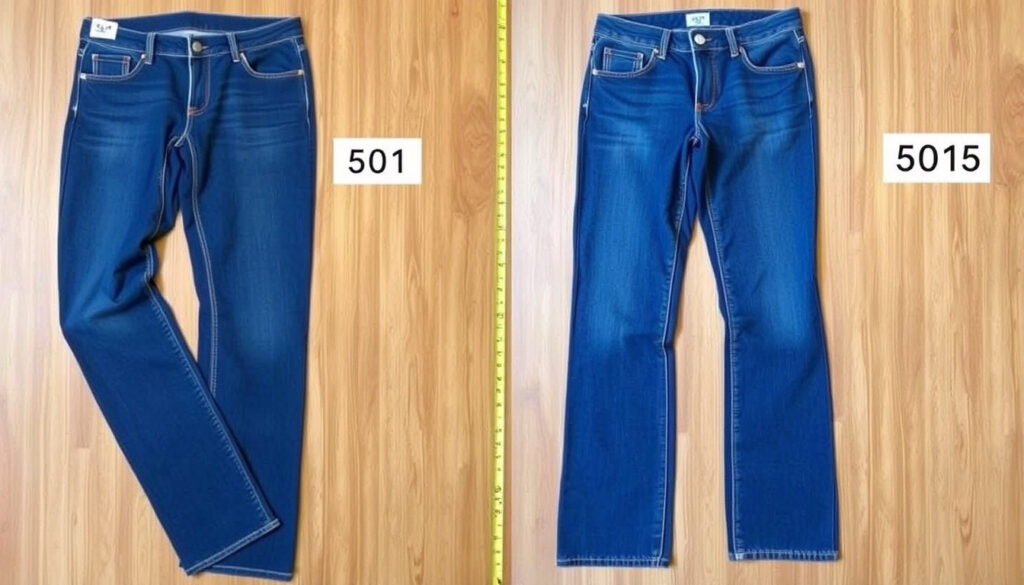
Levi’s Jeans 501 vs 505: Which Fit Is Best for Your Body
If you’ve ever stood in front of a rack of Levi’s jeans wondering what the numbers mean, you’re not alone. The 501 has been around since 1873, yet the 505—introduced in 1967—is often the easier everyday choice.
Year 501 introduced: 1873 · Number of core fits for men: over 20 · Best-selling style globally: 501 Original · Price range for core men’s jeans: $70 – $128 · Retail locations in Ireland: Dublin, Cork, and online via Levi’s IE, Brown Thomas, JD Sports, MandM Direct
Quick snapshot
- 501 is the original straight fit with a button fly (Esquire (men’s style magazine))
- 505 is a regular straight fit with a zip fly (Esquire)
- 501 was patented in 1873; 505 launched in 1967 (Esquire)
- Exact sales figures comparing 501 vs 505 are not publicly available
- Which fit is “better” is entirely subjective and depends on body shape and preference
- 501: 1873 (original patent) – 505: 1967 (modern introduction) (Esquire)
- Try both fits in person or order two sizes; online retailers like Levi’s IE and Brown Thomas offer free returns
| Label | Value |
|---|---|
| Year Levi’s 501 introduced | 1873 |
| Number of core men’s fits | over 20 |
| 501 waist rise | sits at natural waist |
| 505 closure type | zip fly |
| Most popular women’s fit | 721 High Rise Skinny |
| Common price range in Ireland | €70 – €120 |
Which is better, Levi’s 501 or 505?
The pattern: one jean wins on heritage, the other on daily practicality.
Fit differences between 501 and 505
- 501: straight leg, button fly, sits at natural waist (Esquire (men’s style magazine))
- 505: regular fit, zip fly, sits slightly below the natural waist (Esquire)
- One YouTube comparison found a 10.5-inch rise for both models tested, but the leg opening measured 7.75 inches (501) vs 7.5 inches (505) (YouTube (fit reviewer))
The 505 is generally roomier through the seat and thigh than the 501, according to Outsons (men’s fashion blog). That extra space makes the 505 a better pick for athletic builds, while the 501’s closer top block suits slimmer frames.
The implication: the rise is nearly identical, but the leg opening difference — a quarter-inch — changes the silhouette noticeably.
Body shape recommendations for each style
- 501: universally flattering for most body shapes because it’s neither too tight nor too loose (Esquire)
- 505: best for men with athletic thighs or a straighter hip-to-waist ratio (Esquire)
When to choose 501 over 505 and vice versa
Choose the 501 if you want a heritage look, a button fly, and a classic straight leg that works with almost any outfit. Choose the 505 if you prefer the convenience of a zip fly and need more room through the hips and thighs. As MaplePulse (Ireland buying guide) notes, the 501 is the better choice for button-fly fans, while the 505 suits those who want a zip fly and more breathing room.
What are the different levels of Levi jeans?
Levi’s fit families: Classic, Regular, Slim, Skinny, Taper, Straight, Bootcut
Levi’s categorises jeans by fit number and collection tier. The 501, 505, 511, and 514 are all part of the core men’s range, each with a distinct silhouette. According to Esquire, the 501 is the original straight fit, the 505 is a regular straight fit, the 511 is slim, and the 514 is a straight taper. Beyond these, Levi’s offers Skinny, Bootcut, and Relaxed fits.
Levi’s quality tiers: Premium, Vintage, Made & Crafted, Levi’s XX
- Premium line: higher-quality denim and detailing (Esquire)
- Made & Crafted and Vintage Clothing: top-tier lines with premium materials and heritage construction
How to read the style number (e.g., 501, 505, 511, 514)
The first digit often indicates the fit family (5 for men’s jeans), and the last two digits specify the exact cut. The 501 is the original blueprint; the 505 was introduced in 1967 as a modern alternative (Esquire).
For a first-time buyer, the 501 is the safest heritage choice, but the 505 offers more comfort for active builds. The 511 is a modern slim option for lean frames.
The pattern: each two-digit suffix signals a specific combination of rise, taper, and room — once you decode that, you never guess again.
Which Levi’s is original?
History of the 501 jean
Levi Strauss & Co. patented the 501 in 1873, making it the original blue jean (Esquire (men’s style magazine)). The design has remained largely unchanged: a straight leg, button fly, and mid-rise waist.
What makes the 501 the original
The 501 is the archetype from which all other Levi’s fits evolved. Every other style—505, 511, 514—is a later variation. The 501’s button fly is a hallmark of its heritage, while the 505 introduced a zip fly for convenience in 1967.
Differences between 501 Original and other styles
- 501: straight leg, button fly, natural waist
- 505: regular fit, zip fly, slightly lower rise
- 511: slim fit, zip fly, low rise
- 514: straight taper, zip fly, mid rise
As The Modest Man (style blog) points out, the 501 and 505 can look very similar when cuffed, but the 505 has more room in the thigh.
The catch: the 501’s heritage appeal is genuine, but the visual difference versus the 505 is subtle — most people notice only once they handle the fly.
What is the most popular Levi’s jeans?
501 as the best-seller
Consistently, the 501 is the best-selling Levi’s style worldwide (Esquire). Its iconic status and universal fit drive its popularity.
Other popular fits: 511, 505, 514
- 511 Slim: popular among younger men for a modern, tapered look
- 505 Regular: a strong seller for men who want more room in the thigh
- 514 Straight Taper: a middle ground between straight and slim
Women’s best-sellers: 721 High Rise Skinny, 311 Shaping Skinny
For women, the 721 High Rise Skinny is often cited as the top fit, followed by the 311 Shaping Skinny, according to Levi’s official site.
What this means: the 501 dominates by cultural weight, but the 505 competes on sheer physical comfort for a specific — and growing — segment of buyers.
Is Levi 501 flattering?
Who the 501 flatters
Multiple editorial sources describe the 501 as “universally flattering” because its straight leg and mid-rise work on most body shapes (Esquire). It is neither too tight nor too loose, making it a safe choice for anyone.
Fit tips: sizing down for a modern look
Some reviewers suggest sizing down one size in the 501 for a closer, more contemporary fit, especially if you prefer less fabric in the seat.
Comparison with 505 flattery
The 505 is equally flattering for men with athletic thighs, but the 501 offers a more traditional silhouette that suits leaner builds. The 505’s extra room in the thigh can look baggy on slimmer frames.
The 501 is the “universal” fit, but the 505 is the better choice for the growing number of men who lift weights and need thigh room.
The pattern: flattery depends entirely on whether your body fills the jean or the jean fills you — the 501 works for most, the 505 works for the athletically built.
What type of body shape is the 505 best for?
505 fit characteristics
According to Esquire, the 505 is a regular fit through the seat and thigh with a straight leg and a zip fly. It sits slightly below the natural waist. Outsons notes it is generally roomier than the 501 in the thigh area.
Body shapes that suit the 505
- Men with athletic thighs or a straighter hip-to-waist ratio
- Anyone who finds the 501 too tight in the seat or thigh
- Builds that are more muscular or cyclist-strong in the legs
Alternatives if 505 is not right
If you want more room than the 505, try the 514 (straight taper) or the 541 (athletic taper). If you want less room, the 511 or 512 are slimmer options.
The implication: the 505 solves a specific problem — quad-dominant legs — that the
More related posts
 Jimmy Smits: Ethnicity, Height, Career & Current Work
 Come Organizzare Il Tempo – Strategies to Reclaim Your Time
 Edmonton Restaurant Mouse Infestation – Cosmic Pizza Closed by Health Inspectors
 Nick Kroll: Biography, Net Worth, and Family
 Sammy Hagar: Biography, Firing from Van Halen & Key Facts
 Rachel Dratch: Biography, Kids, Relationships, and Biggest Roles
 Who I Taylor Swift Dating? Travi Kelce & Full Hi tory
 Robb Wells: Biography, Current Life, Kids & Harper Rumor