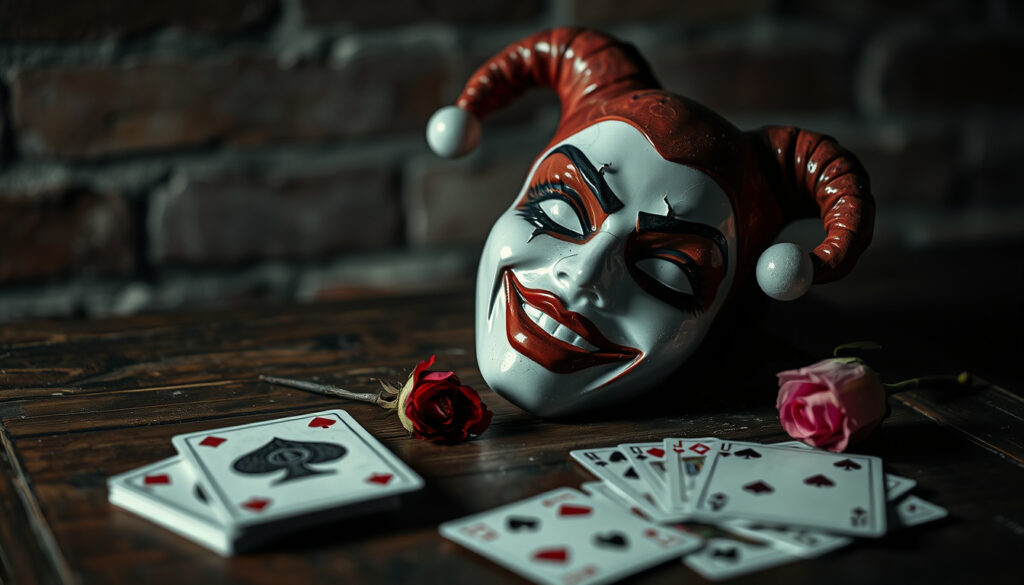
Harley Quinn: Real Story, Identity & Mental Health
Few characters in pop culture have traveled the arc from sidekick to standalone icon quite like Harley Quinn. What began as a one-off villain’s moll in a 1992 cartoon became a character with her own comics, movies, and a fiercely loyal fandom. This guide separates the canonical facts from the fan theories, tracing her evolution from Dr. Harleen Quinzel to the antiheroine we know today.
First appearance: Batman: The Animated Series, September 1992 ·
Creators: Paul Dini and Bruce Timm ·
Real name: Dr. Harleen Frances Quinzel ·
Occupation: Psychiatrist turned supervillain ·
Affiliation: DC Comics, Gotham City ·
Notable relationships: Joker, Poison Ivy
Quick snapshot
- First appeared in Batman: The Animated Series, 1992 (DC Official Character Page)
- Real name is Dr. Harleen Frances Quinzel (DC Official Character Page)
- Created by Paul Dini and Bruce Timm (Nerdist article on the origin)
- Whether the Joker ever genuinely loved Harley varies by story (Nerdist article on the origin)
- Which character is “crazier” is subjective (Harley Quinn Wiki)
- Her exact diagnostic label shifts across media (Nerdist article on the origin)
- Debuted 1992 in animation, comics by 1993 (Nerdist article on the origin)
- First solo series 1999; New 52 reboot 2011 (Nerdist article on the origin)
- Live-action debut 2016 (DC Official Character Page)
- Continued animated series on HBO Max
- Possible future movie appearances
- Ongoing solo comic arcs
Seven key facts about Harley Quinn, one takeaway: her identity is layered, shifting from doctor to villain to antihero across decades.
| Attribute | Value |
|---|---|
| Full name | Dr. Harleen Frances Quinzel |
| First appearance | Batman: The Animated Series, “Joker’s Favor” (1992) |
| Creators | Paul Dini and Bruce Timm |
| Occupation | Psychiatrist, supervillain, antihero |
| Affiliations | Joker, Poison Ivy, Gotham City Sirens, Suicide Squad |
| Powers/abilities | Expert gymnast, skilled psychiatrist, uses mallet and other gag weapons |
| Sexual orientation | Bisexual |
| Notable portrayals | Margot Robbie (live-action), Kaley Cuoco (animated series), Tara Strong (voice) |
What is the real story of Harley Quinn?
Origin in Batman: The Animated Series
- Harley Quinn first appeared in the Batman: The Animated Series episode “Joker’s Favor” in September 1992 (DC Official Character Page).
- She was created by Paul Dini and Bruce Timm as a one-off sidekick for the Joker, inspired by actress Arleen Sorkin (Nerdist article on the origin).
- Her immediate popularity led to a recurring role and eventually integration into DC Comics.
Transition to DC Comics
- Harley made her comic debut in The Batman Adventures #12 (1993), and her first solo origin story, Mad Love, followed that same year (Nerdist article on the origin).
- In Mad Love, she is established as the Joker’s therapist at Arkham Asylum who falls for him, aids his escape, and becomes his accomplice (Batman-Escape character profile).
- From 1999 onward, she received her own solo series and became a mainstay in DC’s wider universe.
Evolution of character
- For years Harley was defined by her relationship with the Joker, but later writers gave her independence. DC notes that “she eventually realized the Joker was holding her back and struck out on her own” (DC Official Character Page).
- She joined the Suicide Squad and Gotham City Sirens, and her modern portrayals emphasize antihero qualities (DC Official Character Page).
The pattern: Harley Quinn’s arc from disposable henchwoman to a lead character with her own moral code is rare in mainstream comics. The implication: her growth reflects a broader shift in how audiences accept complex, evolving female characters.
What is Harley Quinn’s real identity?
Dr. Harleen Frances Quinzel
- Her real name is Dr. Harleen Frances Quinzel, as confirmed by DC’s official character page.
- She was a gifted psychiatrist before turning to crime (DC describes her as “a former psychiatrist” who became a criminal mastermind).
Background as a psychiatrist
- Harleen enrolled at Gotham State University and later interned at Arkham Asylum, where she first encountered the Joker (Nerdist article on the origin).
- Her professional skills are noted: Batman-Escape character profile describes her as “a gifted gymnast and psychiatrist.”
Transformation into Harley Quinn
- After being manipulated by the Joker, she adopts the Harley Quinn persona, complete with a jester costume and a mallet (Nerdist article on the origin frames this as “abuse and mind manipulation”).
- DC states that “Harley’s love for the Joker inspired her to adopt the Harley Quinn identity” (DC Official Character Page).
Harley’s professional competence as a psychiatrist is almost always overshadowed by her emotional vulnerability. Her origin hinges on a brilliant therapist being outsmarted by a patient—an irony that defines her tragic arc.
Who is Harley Quinn in love with?
Relationship with the Joker
- Harley is most famous for her obsessive love for the Joker. DC’s official profile describes their dynamic as “sidekick-slash-love interest,” but notes the relationship is abusive and codependent.
- Nerdist explicitly states that in her origin, the Joker manipulates her, and the relationship is framed as “abuse and mind manipulation” (Nerdist article on the origin).
Relationship with Poison Ivy
- In later storylines, Harley develops a romantic and sexual relationship with Poison Ivy. The Harley Quinn Wiki indicates she is currently dating Ivy.
- This relationship is canonically portrayed as supportive and equal, a stark contrast to her dynamic with the Joker.
Evolution of romantic interests
- Initially defined solely by her attachment to the Joker, Harley’s romantic life expanded to include Poison Ivy, and she has occasionally been paired with other characters.
- Her arc increasingly centers on self-love and independence from romantic partners.
The implication: Harley’s romantic journey mirrors her personal growth—from a toxic, one-sided attachment to a healthy partnership, and eventually to a focus on her own identity.
What disability does Harley Quinn have?
Borderline personality disorder
- Harley Quinn is often depicted with borderline personality disorder (BPD), characterized by intense emotions, unstable relationships, and a fragile sense of self. This is widely referenced in fan discourse, though DC does not issue an official diagnosis in the comics.
- She also exhibits traits of histrionic personality disorder, including attention-seeking behavior and dramatic expression.
Other psychological conditions
- Some storylines imply depression, anxiety, and Stockholm syndrome as part of her psychological profile.
- The exact clinical label varies by writer and medium, making her mental health a subject of ongoing interpretation rather than fixed canon.
Portrayal in media
- Animated series and films show her struggling with impulse control and identity fragmentation. The 2019 HBO Max animated series gives her a therapy plotline, directly addressing her mental health.
- Critics note that her condition is sometimes romanticized, but recent portrayals aim for more nuanced treatment.
Harley Quinn is one of the few mainstream comic characters whose mental illness is central to her story—but the inconsistency in her diagnosis risks reinforcing stereotypes. For readers with BPD, her representation can be both validating and troubling.
Was the Joker actually in love with Harley Quinn?
Joker’s treatment of Harley
- In almost every version, the Joker treats Harley as a tool rather than a partner. Nerdist article on the origin highlights that the origin story depicts “abuse and mind manipulation,” not love.
- DC’s official site characterizes Harley as the Joker’s “sidekick-slash-love interest,” but that label is from Harley’s perspective—the Joker’s feelings remain ambiguous.
Canonical interpretations
- Most canonical stories show the Joker as incapable of genuine love due to his psychopathy. Some arcs hint at a twisted attachment, but it’s consistently portrayed as possessive rather than caring.
- The 2024 film Joker: Folie à Deux reportedly recontextualizes their relationship, but prior canon leans heavily toward manipulation.
Fan and critical perspectives
- Many fans interpret the Joker’s actions as evidence of a deep, albeit dysfunctional, bond. Critics argue this overlooks the abusive dynamics explicitly written into the story.
- The debate reflects a broader conversation about fictional portrayals of toxic relationships.
The catch: Whether the Joker “loves” Harley depends on how you define love. If love requires respect and care, the answer is no. If it’s any intense emotional fixation, then maybe—but that’s not the kind of love anyone should want.
Is Harley Quinn LGBTQ?
Relationship with Poison Ivy
- Harley Quinn is canonically bisexual. Her romantic and sexual relationship with Poison Ivy has been depicted in comics since at least 2013, and was explicitly confirmed in the mainstream continuity.
- The Harley Quinn Wiki notes she is “currently dating Poison Ivy.”
Bisexual representation
- DC has confirmed Harley’s bisexuality in multiple storylines and media adaptations, including the 2019 animated series.
- Her relationship with Ivy is one of the most prominent same-sex relationships in mainstream comics.
Confirmation in comics and media
- In Harley Quinn #0 (2013), the two share a kiss, solidifying the romantic nature of their bond.
- The 2020 film Birds of Prey and the HBO Max animated series both treat her bisexuality as established fact, without sensationalism.
Harley Quinn’s bisexuality is not a fan theory—it’s an official part of the character. For LGBTQ readers, her visibility matters, especially because she is a flawed, complex character who isn’t defined solely by her sexuality.
Who’s crazier, Harley or Joker?
Three dimensions, one contrast: both are psychologically damaged, but the nature of their “craziness” differs fundamentally.
| Dimension | Harley Quinn | The Joker |
|---|---|---|
| Moral agency | Shows remorse, seeks redemption | Amoral, rarely questions his actions |
| Empathy | Capable of caring (e.g., for Ivy) | Lacks genuine empathy |
| Capacity for change | Has evolved into an antihero | Remains static in his chaos |
The pattern: Harley’s mental health issues are rooted in trauma and attachment, while the Joker’s are rooted in a fundamental break from reality. The trade-off: Harley is more sympathetic and treatable, but also more vulnerable—the Joker is simply dangerous.
Timeline
- September 1992 – Harley Quinn first appears in Batman: The Animated Series episode “Joker’s Favor” (DC Official Character Page).
- 1993 – Introduced into DC Comics in The Batman Adventures #12 (Nerdist article on the origin).
- 1999 – First solo comic series Harley Quinn launches.
- 2011 – New 52 reboot reimagines the character.
- 2013 – Romantic relationship with Poison Ivy confirmed in Harley Quinn #0.
- 2016 – Margot Robbie plays Harley in Suicide Squad.
- 2019 – Adult animated series debuts on DC Universe/HBO Max.
- 2020 – Birds of Prey focuses on Harley’s independence.
What’s confirmed and what’s unclear
Confirmed facts
- Created by Paul Dini and Bruce Timm for Batman: The Animated Series (Nerdist article on the origin).
- Real name is Dr. Harleen Frances Quinzel (DC Official Character Page).
- Canonically bisexual, in a relationship with Poison Ivy (Harley Quinn Wiki).
- Former psychiatrist who became a supervillain after falling for the Joker (DC Official Character Page).
What’s unclear
- Whether the Joker ever genuinely loved Harley varies by interpretation.
- Who is “crazier” is subjective and depends on the story.
- The specific mental health diagnosis is not consistent across media.
Quotes on Harley Quinn
“We wanted a female sidekick for the Joker, and the idea of a psychiatrist who falls for her patient seemed perfect.”
— Paul Dini, co-creator (Nerdist article on the origin)
“We wanted her to look like a jester, but also be sexy and dangerous.”
— Bruce Timm, co-creator (Nerdist article on the origin)
“She’s not just a villain; she’s a survivor.”
— Margot Robbie, actress (DC Official Character Page)
“A former psychiatrist turned criminal mastermind.”
— DC Comics official description (DC Official Character Page)
Harley Quinn’s journey from the Joker’s shadow to her own spotlight is a rare success story in comics—but it also carries a warning. For anyone struggling with toxic attachments or mental health challenges, her story offers both a cautionary tale and a hope for change. For DC, the character’s evolution proves that audiences will embrace a female antihero who is messy, queer, and emotionally complex. For fans, the implication is clear: Harley Quinn is not just a villain or a hero—she’s a mirror of our own capacity for transformation.
For a deeper look into how her medical training and transformation intersect, read more about Harley Quinns psychology and origin from a psychological perspective.
Frequently asked questions
What is Harley Quinn’s real name?
Dr. Harleen Frances Quinzel, as listed on DC’s official character page.
When did Harley Quinn first appear?
September 1992 in Batman: The Animated Series episode “Joker’s Favor” (DC Official Character Page).
Who created Harley Quinn?
Paul Dini and Bruce Timm (Nerdist article on the origin).
Is Harley Quinn a villain or a hero?
She started as a supervillain but has evolved into an antihero, often helping heroes while still causing chaos (DC Official Character Page).
What are Harley Quinn’s powers?
She is an expert gymnast, has a PhD in psychiatry, and uses a mallet and other gag weapons. DC also lists immunity to toxins (DC Official Character Page).
Who plays Harley Quinn in the movies?
Margot Robbie in the DCEU (Suicide Squad, Birds of Prey, The Suicide Squad).
What is the Harley Quinn animated series about?
The 2019 adult animated series follows Harley after her breakup with the Joker as she tries to become a solo villain in Gotham (Harley Quinn Wiki).
Does Harley Quinn have a solo comic book?
Yes, multiple solo series starting in 1999 and ongoing today.
Related reading: Kill Bill: The Whole Bloody Affair – Differences & Lost Chapter · We Can Be Heroes – Review, Cast, Sequel & Where to Watch
More related posts
 Rachel Dratch: Biography, Kids, Relationships, and Biggest Roles
 Donald Trump: Education, Health, Wealth, Presidency
 Earth Day Quiz: Find Your Animal & Answers
 Sammy Hagar: Biography, Firing from Van Halen & Key Facts
 Amrita Rao: Biography, Career, Family, and Hiatus
 Demetrious Johnson: Record, Stats, UFC Career & Biography
 Tire Comparison: How to Compare Tire Sizes Side by Side