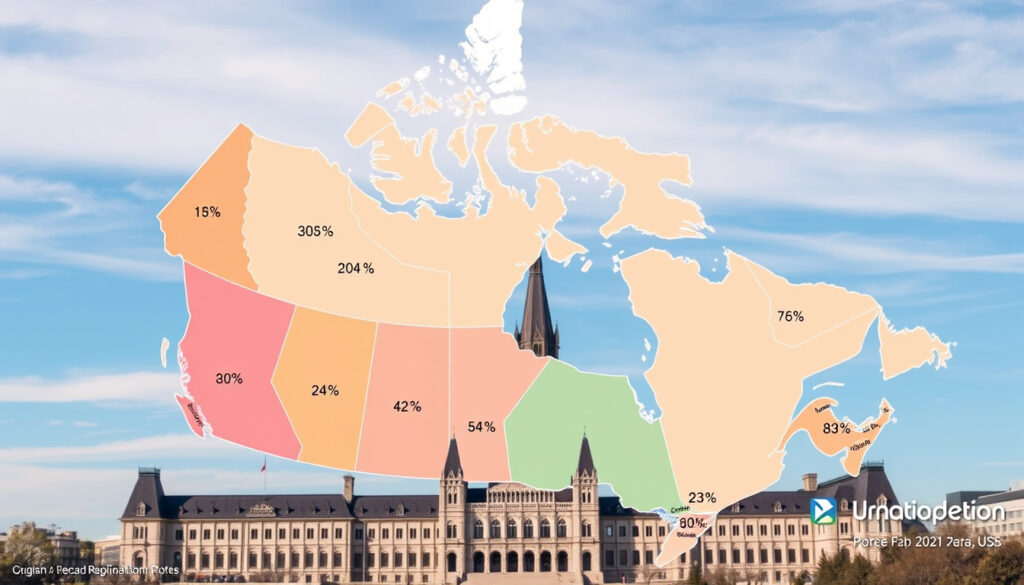
Canada Election Results Seats 2025: Full Breakdown & Map
Canada voted on April 28, 2025, and the results reshaped the House of Commons in ways that didn’t fit the pre-election headlines. With 343 ridings decided, the seat-by-seat outcome tells a story the national vote totals alone miss—regional divides, narrow margins, and a map that splits the country into distinct political zones.
Election Date: April 28, 2025 · Winner: Mark Carney Liberal government · Outcome: Parliamentary minority · Official Results: Elections Canada official results portal · House Standings: House of Commons party standings
Quick snapshot
- Liberals 169 seats, Conservatives 144, Bloc Québécois 22 (Wikipedia: 2025 Election)
- 343 ridings contested—five more than in 2021 due to census redistribution (Wikipedia: Results by riding)
- Mark Carney leads Liberal minority; Pierre Poilievre’s Conservatives remain the official opposition (YouTube: 2025 Election Breakdown)
- Elections Canada official map for all 343 ridings (Elections Canada PDF Map)
- Provincial riding-level results with party affiliation (Elections and Democracy Map)
- Historical results from 1867 to present for comparison (SFU Canadian Election Results)
- Quebec: 78 ridings; Bloc Québécois sweeps all 22 regional seats (Wikipedia: 2025 Election)
- Alberta: Conservatives win 34 of 37 seats with 63.5% vote share (Wikipedia: 2025 Election)
- Atlantic Canada: Liberals dominate Nova Scotia (10 of 11) and PEI (4 of 4) (Wikipedia: 2025 Election)
- Final vote margins for close ridings pending validation
- Recounts in disputed districts may shift seat totals
- Long-term minority government dynamics remain to be seen
| Category | Details |
|---|---|
| Election Date | April 28, 2025 |
| Prime Minister | Mark Carney (Liberals) |
| Government Type | Minority |
| Results Portal | enr.elections.ca/ElectoralDistricts.aspx |
| Standings | www.ourcommons.ca/members/en/party-standings |
Canada election results 2025
Date and key outcomes
The 2025 Canadian federal election took place on April 28, 2025, to elect members of the House of Commons to the 45th Parliament. Governor General Mary Simon issued the writs of election on March 23, 2025, on advice of Prime Minister Mark Carney. The final day for candidate nominations was April 7, 2025, with the complete candidate list announced on April 9 (Wikipedia: 2025 Canadian federal election).
The Liberals secured 169 of 343 seats nationally, while the Conservative Party won 144 seats and the Bloc Québécois claimed 22 seats. The NDP, Greens, and other parties did not meet the 12-seat threshold required for official party status in the House of Commons.
Party performance overview
Vote share figures reveal how differently Canadians voted across regions. In Ontario, the most populous province with 122 seats, Liberals won 70 compared to the Conservatives’ 52—despite much tighter margins in vote share. Ontario delivered the decisive margin: Liberal vote totals in Liberal-held ridings accumulated enough to flip the seat count decisively in their favour.
The prairie provinces told a different story. Alberta’s 37 ridings went to the Conservatives at a 63.5% vote share, with 34 of 37 seats. Saskatchewan (14 seats) gave 13 to the Conservatives, and Manitoba split 7-6 in favour of the Conservatives. Vote share alone would suggest a much closer national race than the seat count reflects.
Quebec’s 78 ridings produced the Bloc Québécois’s strongest regional showing in Canadian politics. All 22 BQ seats came from Quebec, a concentration unlike any other party’s geographic reach.
Canada election results map 2025
Visual seat distribution
Maps transform the raw numbers into regional patterns. The official Elections Canada PDF map shows political affiliation for all 343 ridings after the April 28 vote (Elections Canada PDF Map). The Elections and Democracy platform hosts an interactive provincial breakdown that makes regional strongholds immediately visible (Elections and Democracy Map).
Electoral districts results
Riding-level data shows both the breadth of majority wins and the narrow margins that decided competitive seats. Newfoundland and Labrador: Liberals won Avalon, Cape Spear, Labrador, and St. John’s East; Conservatives won Central Newfoundland, Long Range Mountains, and Terra Nova—The Peninsulas. British Columbia saw Liberals win North Vancouver—Capilano, Port Moody—Coquitlam, Vancouver Fraserview—South Burnaby, Vancouver Granville, Vancouver Quadra, Victoria, and West Vancouver—Sunshine Coast—Sea to Sky Country. The Conservatives won Okanagan Lake West—South Kelowna, Pitt Meadows—Maple Ridge, Prince George—Peace River—Northern Rockies, Richmond Centre—Marpole, and Vernon—Lake Country—Monashee, while the NDP won Vancouver Kingsway (Elections and Democracy Map).
In Nova Scotia, Liberals won Cape Breton—Canso—Antigonish and Central Nova; the Conservatives won Acadie—Annapolis by a narrow 533-vote margin over the Liberal candidate. In PEI’s Charlottetown, the Liberal candidate won with 13,656 votes—64.75% of the total—reflecting one of the strongest party performances in any riding in the country (Wikipedia: Results breakdown).
The implication: majority-party wins ranged from commanding landslides to barely-threshold margins, and close races in any province could swing differently in the next cycle depending on candidate strength and local issues.
Canada election results seats 2026
Projections vs actuals
The official counts from April 28, 2025 represent the final validated results after Elections Canada reconciliation. These numbers—Liberals 169, Conservatives 144, Bloc Québécois 22—form the baseline for projecting the next cycle. Seat distribution post-election can shift slightly due to recounts or successful legal challenges to results in specific ridings (Elections and Democracy Map).
Historical comparison against 1867–2025 results helps contextualize whether these numbers represent a realignment or a typical cycle variation. Simon Fraser University’s comprehensive election database shows vote patterns across more than 150 years of federal elections (SFU Canadian Election Results). The Elections Canada past elections archive links to official analyses of prior cycles (Elections Canada Past Elections).
House of Commons standings
The official standings page at the House of Commons tracks all 343 elected members by party affiliation. With 343 total seats, the threshold for a majority government is precise: 172 seats. The Liberals hold 169 seats—three short of a majority. The Bloc Québécois holds exactly 12 seats—at the threshold for official party recognition and status in parliamentary proceedings.
What this means: minority governments face perpetual uncertainty on legislation. Working agreements with opposition parties become essential, and any single opposition party with enough seats can threaten a confidence vote. The 45th Parliament’s minority dynamic will test whether the governing Liberals can maintain stable support or face early dissolution.
Canada election results by province
Quebec results
Quebec’s 78 ridings produced the most regionally distinctive result in the country. The Liberals won 44 seats, the Bloc Québécois won all 22 of its seats exclusively in Quebec, and the Conservatives won 11. No other province has a third party with such absolute geographic concentration—every single BQ seat in the country sits within Quebec’s borders.
This regional concentration makes Quebec uniquely significant in federal politics. The Bloc Québécois cannot win seats outside Quebec, but within Quebec, it competes effectively against both major federal parties. The data shows this isn’t a minor presence—it represents a structural feature of Canadian electoral geography.
Provincial breakdowns
Vote share patterns varied dramatically across provinces. In British Columbia (43 seats), vote share was nearly tied at 41.8% Liberal versus 41.0% Conservative, yet the seat count split 20-19 in favour of the Liberals. In Alberta, Conservative vote share reached 63.5%—translating to 34 of 37 seats. Saskatchewan saw 64.6% Conservative vote share with 13 Conservative seats versus 1 Liberal.
In Ontario, the Liberals received 49.0% vote share but won 70 of 122 seats—demonstrating how vote efficiency matters as much as raw support. The Atlantic provinces showed the strongest Liberal lean: Nova Scotia (57.2% Liberal vote share, 10 of 11 seats), Prince Edward Island (57.5%, 4 of 4 seats), New Brunswick (53.4%, 6 of 10 seats), and Newfoundland and Labrador (54.0%, 4 of 7 seats). The territories contributed 3 seats: Yukon and Northwest Territories went Liberal; Nunavut went to an independent candidate.
How often does Canada have elections for prime minister
Federal election cycle
Canada operates under a flexible election schedule rather than fixed dates. Federal elections must occur at least once every four years, but the Prime Minister can advise the Governor General to call an election earlier. Historical records show this flexibility has produced elections ranging from 18 months apart during minority governments to the full four-year term when majority governments remain stable.
This means Canada’s next federal election could occur before April 2029 if the political situation demands it. The flexibility allows governing parties to time elections strategically—calling them when conditions appear favourable—while ensuring voters can remove a government within four years if they choose.
House of Commons terms
The current 45th Parliament was elected on April 28, 2025, meaning its maximum term extends to April 2029. The Governor General issues the writs that formally trigger each election, acting on the Prime Minister’s advice. Once elected, a Parliament continues until dissolved, and dissolution can occur at any time within the four-year window.
What to watch: minority governments tend to be shorter-lived than majorities. The governing Liberals will need to maintain confidence votes in the House of Commons, making each legislative session potentially fragile. If the opposition parties coordinate effectively, they could force an early election or compel policy concessions.
Confirmed facts
- Election held April 28, 2025
- 343 ridings contested
- Liberals 169, Conservatives 144, Bloc Québécois 22 seats
- Writs issued March 23, 2025
- Official maps at enr.elections.ca and electionsanddemocracy.ca
What’s unclear
- Exact final vote margins for close ridings pending full validation
- Post-election recounts may adjust specific seat totals
- Long-term minority government coalition dynamics
“Mark Carney’s surprise victory over Pierre Poilievre in the Canadian general election of 2025 reshapes the national political landscape.”
— YouTube narrator, 2025 Election Breakdown
Related reading: Canada US Travel Visa Integrity Fee · GIS Payment September 2025
Mark Carney’s Liberals claimed key victories across provinces, with seat tallies closely matching those in Public Frames results coverage that highlight the minority government’s formation.
Frequently asked questions
What were the final seat counts in the Canada election?
The Liberals won 169 seats, the Conservatives won 144, and the Bloc Québécois won 22. The remaining seats went to other candidates, with no other party reaching the 12-seat threshold for official party status.
Which party won the most seats?
The Liberal Party won the most seats with 169 of 343. The Bloc Québécois held all 22 of its seats in Quebec, while the NDP and Greens did not qualify for official party status.
Where can I find the official Canada election results?
Elections Canada publishes official results at enr.elections.ca, including district-by-district maps and vote totals. The House of Commons website at www.ourcommons.ca tracks current member standings by party.
What is a majority government in Canada?
A majority government requires at least 172 of 343 seats in the House of Commons. This allows a single party to pass legislation without needing votes from opposition MPs. The Liberals hold 169 seats—three short of a majority.
How are seats allocated by province?
Seat allocation follows the 2021 census redistribution. British Columbia has 43 seats, Alberta 37, Saskatchewan 14, Manitoba 14, Ontario 122, Quebec 78, New Brunswick 10, Nova Scotia 11, Prince Edward Island 4, Newfoundland and Labrador 7, plus 3 territorial seats.
When is the next Canadian federal election?
The current Parliament can serve until April 2029 at minimum. The Prime Minister may call an earlier election if political circumstances require it.
What role does Elections Canada play?
Elections Canada is the independent federal agency that administers federal elections, enforces election law, and maintains the official record of results.
With 169 seats against 144 for the Conservatives, the Liberal minority government will need to build cross-party support to pass legislation. The Bloc Québécois’s 22 seats make them a key negotiating partner in a minority Parliament.
Alberta gave the Conservatives 63.5% of its popular vote yet delivered only 34 seats, while Nova Scotia gave Liberals 57.2% but produced a near-sweep of 10 of 11 ridings. The riding system creates outcomes that diverge sharply from raw vote shares.
For political observers and voters alike, the seat map from April 28, 2025 makes one thing clear: regional politics in Canada remain sharply divided, with the Conservatives commanding the west, Liberals dominating the east, and Ontario and BC serving as competitive battlegrounds where neither side can claim easy victory.
More related posts
 Frankie Valli at 90: Health, Touring, and Sinatra’s Praise
 Frank Gallagher Death: What Happened to Frank on Shameless
 Lou Adriane Cassidy – Age, Awards, Songs, and Biography
 Things to Do in Montreal: Top Attractions & Itineraries
 Taylor Swift The Life of a Showgirl Songs – Eras Tour Setlist Facts
 Tim Houston: Age, Wife, Net Worth, and Political Career
 Lewis Hamilton: Ferrari Move, Net Worth, Dating Rumors (2025)
 Ayesha Khan: Age, Controversy, and Rise to Fame