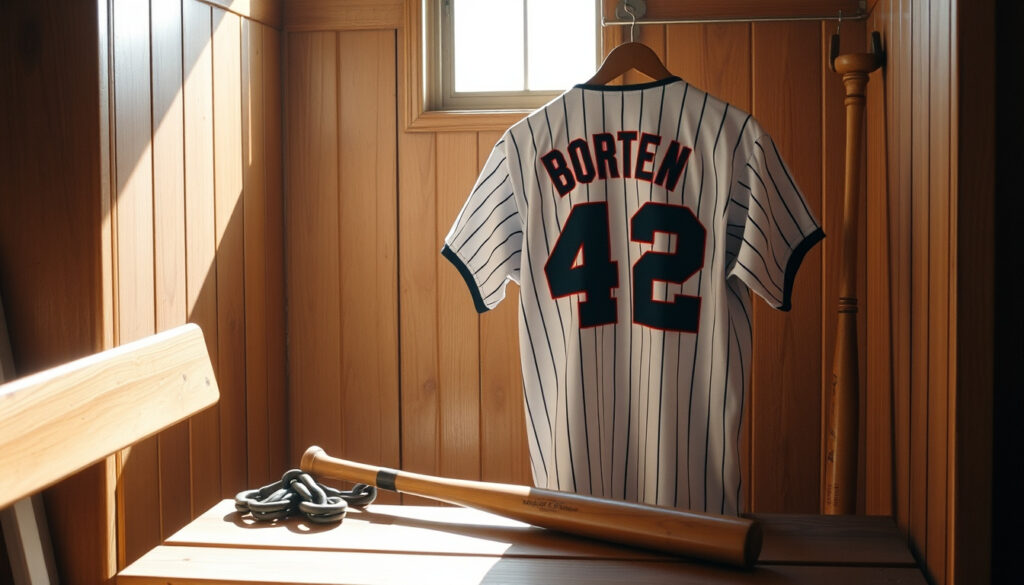
Jackie Robinson: Biography, Breaking Color Barrier, Legacy
There are few names in sports that carry the weight of Jackie Robinson’s. Before he stepped onto Ebbets Field on April 15, 1947, baseball — and much of America — had drawn a color line that seemed unbreakable. Robinson didn’t just break it; he made it impossible to put back together. Here’s the full story of the man behind the number 42, from his military service to his post-career activism, and why his legacy still shapes the game today.
Born: January 31, 1919 ·
Died: October 24, 1972 ·
MLB Debut: April 15, 1947 ·
Hall of Fame Induction: 1962
Quick snapshot
- Robinson broke the MLB color barrier on April 15, 1947 (National Baseball Hall of Fame).
- He served in the U.S. Army and was court‑martialed but acquitted (U.S. Department of War).
- Number 42 is retired across all MLB teams (National Baseball Hall of Fame).
- He died of a heart attack on October 24, 1972 (Britannica).
- Exact wording of his last words — several versions exist.
- Whether the pitch that hit him (by Fritz Ostermueller) was intentional.
- His precise net worth or salary at retirement.
- 1947‑04‑15 – MLB debut, breaks color barrier (National Baseball Hall of Fame).
- 1962 – Elected to Baseball Hall of Fame (National Baseball Hall of Fame).
- 1997 – No. 42 retired league‑wide (National Baseball Hall of Fame).
- Jackie Robinson Day (April 15) continues annually (National Baseball Hall of Fame).
- His family carries on his civil‑rights work through the Jackie Robinson Foundation (Jackie Robinson Foundation).
Eight key facts, one durable pattern: Robinson’s life was a series of firsts and transitions that redefined not just baseball but American society.
| Attribute | Value |
|---|---|
| Full name | Jack Roosevelt Robinson |
| Born | January 31, 1919, Cairo, Georgia, USA |
| Died | October 24, 1972, Stamford, Connecticut, USA |
| MLB Debut | April 15, 1947, for Brooklyn Dodgers |
| Height / Weight | 5 ft 11 in (1.80 m), 195 lb (88 kg) |
| Bats / Throws | Right / Right |
| Career Batting Average | .311 |
| Hall of Fame Induction | 1962 |
Why is Jackie Robinson so famous?
Robinson’s fame rests on one fact: he was the first African American to play Major League Baseball in the modern era, stepping onto the field for the Brooklyn Dodgers on (Britannica (encyclopedic biography)). That single act broke a color barrier that had stood since the 1880s and turned Robinson into a civil‑rights symbol before the Civil Rights Movement had a name.
What was the color barrier in baseball?
- Baseball had been segregated since the late 1800s; Black players were confined to the Negro leagues.
- The unwritten rule (the “gentleman’s agreement”) kept African Americans out of the majors until Branch Rickey, the Dodgers’ general manager, decided to challenge it.
- Rickey said he was “looking for a ballplayer with the guts not to fight back” — a man who could endure racial abuse without retaliating (Britannica (encyclopedic biography)).
The catch: Robinson wasn’t just any player. He had already proven himself in college football, track, basketball, and the Negro leagues.
How did Robinson’s debut change the game?
- In his first season (1947), Robinson won the inaugural Rookie of the Year Award (U.S. Department of War (military biography)).
- By 1949 he was the National League MVP, batting .342 with 37 stolen bases (Britannica (encyclopedic biography)).
- His style — aggressive base‑running, clutch hitting, and relentless hustle — electrified the game and forced opponents to see him as a peer, not a target.
What this means: Robinson didn’t just integrate baseball — he made integration a winning strategy. Within a decade, every MLB team had Black players, and the color line was erased for good.
What happened to Jackie Robinson?
After retiring in 1956, Robinson remained in the public eye as a businessman, activist, and advocate. But his health declined rapidly in his early 50s.
How did Jackie Robinson die?
- Robinson died of a heart attack at his home in Stamford, Connecticut, on (Britannica (encyclopedic biography)). He was 53.
- He had been battling complications from diabetes and heart disease for years.
- His death came just nine days after he threw out the ceremonial first pitch at the 1972 World Series.
What were the circumstances of his death?
- By 1972, Robinson was nearly blind from diabetes and had already lost a leg to the disease.
- His last public appearance was at the World Series, where he urged baseball to hire a Black manager — a call the sport finally answered with Frank Robinson in 1975.
The pattern: Even in his final public act, Robinson was pushing for progress. His death didn’t end the fight; it intensified it.
Did Jackie Robinson fight in WWII?
Yes — and his military service was as consequential as his baseball career. Robinson served in the U.S. Army from 1942 to 1944 (U.S. Department of War (military biography)).
What branch of the military did Jack Roosevelt Robinson serve in?
- He was assigned to the 761st Tank Battalion, a segregated African American unit.
- He was commissioned as a second lieutenant after Officer Candidate School.
Why was he court‑martialed?
- In 1944, Robinson refused an order to move to the back of a military bus at Fort Hood, Texas.
- He was court‑martialed for insubordination, but after a trial the all‑white panel acquitted him (U.S. Department of War (military biography)).
- He was honorably discharged later that year.
The implication: Robinson’s refusal to accept second‑class treatment in the Army foreshadowed his approach in baseball. He wouldn’t back down, even when the stakes were prison.
Why is number 42 retired in baseball?
Robinson’s uniform number, 42, is the only number ever permanently retired across all of Major League Baseball. It happened in 1997 on the 50th anniversary of his debut (National Baseball Hall of Fame (history of the retirement)).
Who was the last player to wear number 42?
- Players who wore 42 at the time were grandfathered in; the last was Mariano Rivera, who retired after the 2013 season.
- Today, no active player can wear 42 except on Jackie Robinson Day.
What is the significance of April 15 (Jackie Robinson Day)?
- Every year on April 15, every MLB player, coach, and umpire wears number 42 to honor Robinson (National Baseball Hall of Fame (Jackie Robinson page)).
- The tradition started in 2004 and has become one of baseball’s most visible annual ceremonies.
Why this matters: The number 42 is no longer just a uniform digit — it’s a daily reminder that integration was a team effort and that the fight for equality continues.
Are any of Jackie Robinson’s kids still alive?
Jackie Robinson had three children with his wife, Rachel Isum Robinson. As of 2025, two are still living.
How many children did Jackie Robinson have?
- Jackie Robinson Jr. (1946–1971) died in a car accident at age 24.
- Sharon Robinson (born 1950) — an author and educational consultant — lives in Connecticut.
- David Robinson (born 1952) — a coffee farmer and activist — lives in Tanzania.
What are the names of Jackie Robinson’s children?
- Sharon and David are both active in preserving their father’s legacy through the Jackie Robinson Foundation (Jackie Robinson Foundation (official family narrative)).
- Rachel Robinson, his widow, celebrated her 100th birthday in 2022 and remains the head of the foundation.
The trade-off: Fame comes with family pressure; Jackie Jr.’s tragic death showed that even Robinson couldn’t shield his children from life’s cruelties. But Sharon and David have carried the torch with quiet dignity.
Timeline of Jackie Robinson’s life and legacy
- 1919 – Jack Roosevelt Robinson born in Cairo, Georgia.
- 1939‑1941 – Attends UCLA, becomes first student to letter in four sports.
- 1942‑1944 – Serves in U.S. Army; court‑martialed and acquitted for resisting bus segregation (U.S. Department of War).
- 1945 – Signs with the Kansas City Monarchs of the Negro leagues.
- 1946 – Plays for Montreal Royals, the Dodgers’ minor‑league affiliate.
- 1947‑04‑15 – MLB debut for Brooklyn Dodgers, breaks color barrier (National Baseball Hall of Fame).
- 1947 – Named Rookie of the Year.
- 1949 – Wins National League MVP, batting .342 with 37 stolen bases (Britannica).
- 1955 – Wins only World Series championship with Dodgers.
- 1956 – Retires from baseball.
- 1962 – Inducted into Baseball Hall of Fame (National Baseball Hall of Fame).
- 1972‑10‑24 – Dies of heart attack at age 53 (Britannica).
- 1997 – MLB retires number 42 league‑wide (National Baseball Hall of Fame).
- 2005 – Posthumously awarded Congressional Gold Medal.
What we know and what remains unclear
Confirmed facts
- Robinson broke the MLB color barrier on April 15, 1947 (National Baseball Hall of Fame).
- He served in the U.S. Army and was court‑martialed but acquitted (U.S. Department of War).
- Number 42 is retired across all MLB teams (National Baseball Hall of Fame).
- He died of a heart attack on October 24, 1972 (Britannica).
- His children Sharon and David are alive; Jackie Jr. died in 1971.
- Robinson was a six-time All‑Star from 1949 through 1954 (U.S. Department of War).
- He won the National League MVP in 1949 (Britannica).
- His career batting average was .311 (National Baseball Hall of Fame).
- He stole 197 bases (per Jackie Robinson Foundation) or 200 (per Baseball Hall of Fame) (Jackie Robinson Foundation; National Baseball Hall of Fame).
- He was inducted into the Baseball Hall of Fame in 1962 (National Baseball Hall of Fame).
What’s unclear
- Exact wording of his last words — various accounts exist.
- Whether the pitch that hit him (by Fritz Ostermueller) was intentional.
- Robinson’s precise net worth or salary at retirement.
- The exact number of stolen bases (197 vs. 200 depending on the source).
Robinson’s legacy doesn’t hinge on a few statistical discrepancies. The 197 vs. 200 stolen‑base gap shows how even the Hall of Fame’s own records can differ — but the impact of his career is unquestioned.
Quotes from Jackie Robinson and his contemporaries
“A life is not important except in the impact it has on other lives.”
– Jackie Robinson, Jackie Robinson Foundation (official quotes)
“You can hate me if you want, but you have to respect my teammate.”
– Pee Wee Reese, Dodgers teammate, on publicly embracing Robinson
“I’m looking for a ballplayer with the guts not to fight back.”
– Branch Rickey, Dodgers GM, explaining his search for the right man to integrate baseball
“Jackie Robinson made it possible for me to do what I did.”
– Martin Luther King Jr., Britannica (civil rights context)
Robinson’s death in 1972 came just as the civil‑rights gains of the 1960s were being tested. But his example — of courage under fire, of refusing to retreat — remains the template for every athlete who uses their platform for social change. For the millions of fans who see number 42 on Jackie Robinson Day, the memory isn’t just about baseball. It’s about what one person can demand of a country.
en.wikipedia.org, espn.com, jackierobinsonmuseum.org, archives.gov, cardinalsuniformsandlogos.com, jackierobinson.org, nmaahc.si.edu, youtube.com
For a deeper look into the tradition of number 42’s retirement and its broader cultural impact, explore Jackie Robinsons legacy and number 42.
Frequently asked questions
What was Jackie Robinson’s real name?
Jack Roosevelt Robinson.
What position did Jackie Robinson play?
He primarily played second base, but also first base and outfield during his career.
How many stolen bases did Jackie Robinson have?
Records vary: the Jackie Robinson Foundation counts 197, the Baseball Hall of Fame counts 200 (Jackie Robinson Foundation; National Baseball Hall of Fame).
Did Jackie Robinson have any siblings?
Yes, he had four siblings: three brothers (Edgar, Frank, Mack) and one sister (Willie Mae).
What number did Jackie Robinson wear?
Number 42.
When did Jackie Robinson die?
October 24, 1972.
What is Jackie Robinson Day?
April 15, the anniversary of his MLB debut, when every MLB player wears number 42 to honor him (National Baseball Hall of Fame).
More related posts
 Who I Taylor Swift Dating? Travi Kelce & Full Hi tory
 Roblox Redeem Code Robux: How to Claim Codes & Gift Cards
 Cuba Gooding Jr.: What Happened, Net Worth, Wife, Movies
 Raegan Revord: Age, Book, Gender & Young Sheldon Star
 Emma Watson: Relationship, Net Worth, Acting Hiatus & Age
 Why Is the TSX Down Today? Reasons for Market Drop
 Robb Wells: Biography, Current Life, Kids & Harper Rumor
 Edmonton Restaurant Mouse Infestation – Cosmic Pizza Closed by Health Inspectors