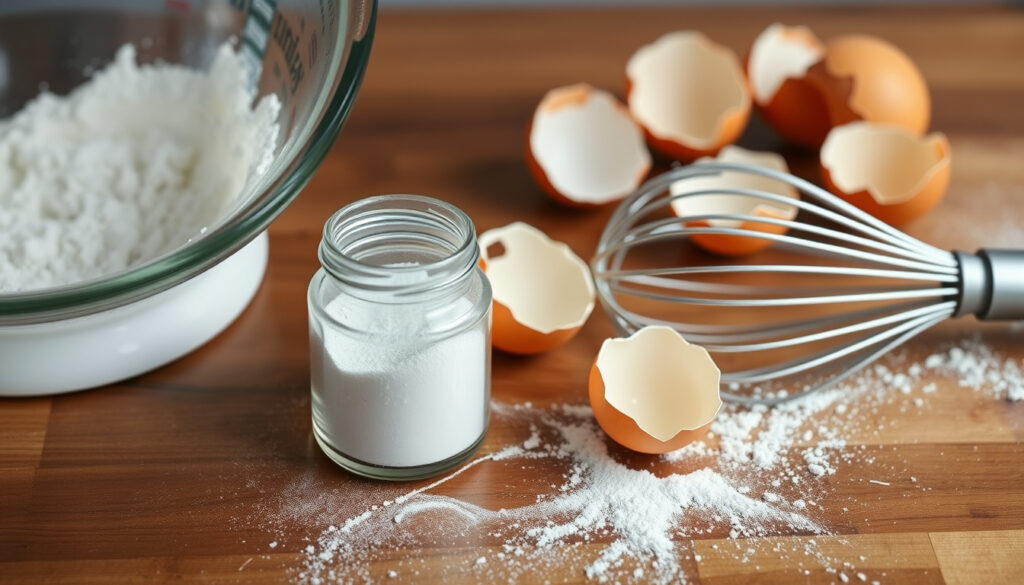
What Is Cream of Tartar? Uses, Substitutes & Benefits
Cream of tartar is that mysterious white powder tucked away in your spice drawer, but it’s actually a winemaking leftover that’s been quietly saving meringues and preventing sugar crystals for centuries. Here’s what it really is, how it works in the kitchen, and which health claims actually hold up.
Chemical name: Potassium bitartrate · Source: Byproduct of wine fermentation · Common usage: Stabilizing egg whites in meringue · Availability: Spice aisle in most supermarkets · Taste: Sour and acidic
Quick snapshot
- Cream of tartar is potassium bitrate, a by‑product of winemaking (Healthline (nutrition resource))
- It stabilizes egg whites in meringues (Healthline (nutrition resource)) (Healthline (nutrition resource))
- It prevents sugar crystallization in syrups and candies (McCormick (spice authority))
- It acts as a leavening agent when combined with baking soda (Healthline (nutrition resource)) (Healthline (nutrition resource))
- Effectiveness for migraine relief is not well‑studied (Healthline (nutrition resource))
- Optimal dosage for electrolyte supplementation is not established (Healthline (nutrition resource))
- Effectiveness for preserving fruits and vegetables is not well‑studied (McCormick (spice authority))
- No major timeline milestones are documented in available research; the ingredient has been a kitchen staple since at least the 19th century (inferred from continuous winemaking by‑product use)
- Expect continued use in home baking, with growing interest in substitute comparisons and electrolyte claims (McCormick (spice authority))
Five key attributes that define cream of tartar at a glance.
| Attribute | Value |
|---|---|
| Chemical Name | Potassium bitartrate |
| Source | Wine fermentation residue |
| Taste | Sour, acidic |
| Common Use | Stabilizing egg whites |
| Alternative Names | Cream of tartar, potassium hydrogen tartrate |
What Is Cream of Tartar?
Cream of tartar is the common name for potassium bitartrate, a crystalline acid that forms naturally during winemaking. Healthline (nutrition resource) explains that it crystallizes on the inside of wine barrels and fermentation tanks, then is collected, purified, and ground into a fine white powder.
What is cream of tartar made of?
- Potassium bitartrate (KC4H5O6) – an acidic salt derived from tartaric acid.
- It contains roughly 20–25% potassium by weight, making it a concentrated source of the mineral.
Where does cream of tartar come from?
- It is a by‑product of wine fermentation. Tartaric acid naturally present in grapes reacts with potassium to form the crystalline sediment.
- Most commercial cream of tartar comes from wineries in Italy, Spain, and France, then refined into the powder sold in stores.
Why is it called cream of tartar?
- The name derives from the tartaric acid crystals that coat the inside of wine barrels – called “tartar” in historical alchemy. “Cream” refers to the creamy, fine powder obtained after purification (McCormick (spice authority)).
The implication: Despite the fancy name, cream of tartar is simply a refined acid leftover from winemaking – nothing more, nothing less.
The implication: Cream of tartar is a simple acidic salt with a long history, but its uses are entirely culinary unless proven otherwise.
What Is the Purpose of Cream of Tartar in Baking?
Cream of tartar serves several unique roles in the kitchen because of its acidic nature and ability to interact with proteins and sugars.
How does cream of tartar stabilize egg whites?
- It lowers the pH of egg whites, preventing the protein strands from over‑coagulating and collapsing. This produces stiff, glossy peaks in meringues (Healthline (nutrition resource)).
Why is cream of tartar used in cookies and cakes?
- In snickerdoodles and sugar cookies, it reacts with baking soda to produce carbon dioxide, giving a light, airy texture.
- It also prevents sugar from recrystallizing, yielding a softer crumb in cakes and a smoother texture in icing (McCormick (spice authority)).
The pattern: Nearly every baking use relies on cream of tartar’s acidity – whether to stabilize foam, activate a base, or disrupt crystal formation.
Cream of tartar is a baker’s insurance policy: a tiny pinch ensures meringues hold their shape and candies stay smooth. Skip it, and you risk flat foam or gritty syrup.
The pattern: All its baking functions rely on acidity – a tiny pinch changes the chemistry.
Is Cream of Tartar Just Baking Soda?
No – and mixing them up can ruin a recipe. Here’s the critical difference.
What is the difference between cream of tartar and baking soda?
- Cream of tartar is an acid (pH ~3.5). Baking soda is a base (pH ~8.5).
- They cannot be used interchangeably because their chemical reactions are opposites. Baking soda needs an acid to activate; cream of tartar provides that acid.
Can you substitute baking soda for cream of tartar?
- Direct substitution fails – replacing cream of tartar with baking soda would make the batter more alkaline and potentially turn baked goods bitter.
- If a recipe calls for cream of tartar and baking soda together, you can swap in baking powder (which contains both) at a ratio of 1.5 tsp baking powder for every 1 tsp cream of tartar (McCormick (spice authority)).
The trade-off: Baking powder is a convenient substitute when you need the dual action, but it adds extra leavening that can alter texture in delicate recipes like meringue.
What Can I Use as a Substitute for Cream of Tartar?
Several household acids can step in, depending on the recipe. The key is matching the acidity level and liquid content.
Can baking powder replace cream of tartar?
- Yes, when the recipe also calls for baking soda. Use 1.5 tsp baking powder for every 1 tsp cream of tartar (McCormick (spice authority)).
- Best suited for cookies and cakes where the extra leavening is not a problem.
What are other substitutes like lemon juice or vinegar?
- For every ½ tsp cream of tartar, use 1 tsp lemon juice or white vinegar (McCormick (spice authority)).
- Because liquids change the moisture content, this works best in recipes where you can adjust total liquid – such as meringues and frostings.
What is the best substitute for meringue?
- Lemon juice or vinegar are the most reliable; add 1 tsp per 3 egg whites. They lower the pH similarly but do not add extra powder that could affect volume.
- Buttermilk or yogurt can work in doughs, but they add fat and protein, so they are not ideal for meringue.
Why this matters: Substitution always involves a trade‑off. Stick with the original ingredient when precision matters, but know that lemon juice or vinegar can save a recipe in a pinch.
Acid substitutions like lemon juice add extra liquid, which can make meringues weep or cookies spread. Always reduce the total liquid slightly to compensate.
The catch: Substitutions are never perfect; for best results, use the original ingredient when possible.
Is Cream of Tartar Good for Electrolytes?
Cream of tartar does contain potassium, but using it as an electrolyte supplement requires caution.
What are the health benefits of cream of tartar?
- It is a concentrated source of potassium – about 495 mg per teaspoon. Some people reportedly use it to relieve muscle cramps or migraine symptoms (Healthline (nutrition resource)).
- However, these uses are not well‑studied, and no official dosage guidelines exist.
Is cream of tartar safe to consume?
- In food amounts (e.g., ⅛–¼ tsp per recipe), it is safe for most people.
- Excessive intake (multiple teaspoons at once) can cause hyperkalemia – dangerously high potassium levels – leading to nausea, irregular heartbeat, or even cardiac arrest (Healthline (nutrition resource)).
How much cream of tartar for electrolytes?
- No evidence‑based dosing exists. Some anecdotal sources suggest ½ tsp in water once daily, but this is not supported by clinical research. Consult a doctor before using it as a supplement.
The catch: The potential benefits for cramps or migraines remain anecdotal. Without proper dosing studies, the risks of hyperkalemia outweigh any unproven gains for most people.
Comparison at a Glance: Cream of Tartar vs. Baking Soda vs. Baking Powder
Three common leavening agents, one key difference: acidity.
| Property | Cream of Tartar | Baking Soda | Baking Powder |
|---|---|---|---|
| Chemical nature | Acid (potassium bitartrate) | Base (sodium bicarbonate) | Contains both acid (cream of tartar) and base |
| Primary function | Stabilizes, prevents crystals | Leavening (needs acid) | Self‑contained leavening |
| Can substitute? | – | No (wrong pH) | Yes, but adjust ratio (1.5 tsp baking powder for 1 tsp cream of tartar) |
| Taste | Sour | Bitter if unneutralized | Slightly salty |
The takeaway: Cream of tartar is the only one that’s an acid; baking soda and powder are bases or mixtures.
How to Use Cream of Tartar in Common Recipes
Three straightforward ways to put this powder to work.
- In meringue: Add ⅛ teaspoon per egg white before whipping. This ensures stiff, glossy peaks that hold their shape (Healthline (nutrition resource)).
- In snickerdoodles: Use 1 teaspoon per batch (about 2½ dozen cookies) for the classic tangy flavor and soft texture (McCormick (spice authority)).
- As a substitute for buttermilk: Add ½ teaspoon cream of tartar to ⅓ cup milk, let sit 5 minutes, then use in place of buttermilk in quick breads.
What this means: These measurements give a reliable starting point for most recipes.
What the Evidence Says
Confirmed facts
- Cream of tartar is potassium bitartrate, a winemaking by‑product (Healthline (nutrition resource)).
- It stabilizes egg whites and prevents sugar crystallization (McCormick (spice authority)).
- Lemon juice or baking powder can substitute in many recipes (McCormick (spice authority)).
What’s unclear
- Effectiveness for migraine relief is not well‑studied (Healthline (nutrition resource)).
- Optimal dosage for electrolyte supplementation is not established (Healthline (nutrition resource)).
- Effectiveness for preserving fruits and vegetables is not well‑studied (McCormick (spice authority)).
The implication: The confirmed facts are solid, but health claims remain speculative.
Expert Perspectives
“Cream of tartar gives rise to the lightest, most airy desserts. It’s the secret behind perfect meringues and cloud‑like cakes.”
— McCormick (spice authority)
“Cream of tartar stabilizes the foam structure in meringue, preventing the egg whites from collapsing and giving you a higher, more stable volume.”
— King Arthur Baking (baking expertise)
What this means: Two of the most trusted names in baking agree – cream of tartar is not just an additive; it’s a structural foundation for foams and sweets.
For home bakers relying on cream of tartar for meringue, the margin is thin. Even ¼ teaspoon too much can leave a sour aftertaste. Measure precisely, especially when substituting with liquid acids.
What this means: Both experts agree on its role, but caution on dosage is warranted.
Cream of tartar is a simple acid with remarkable power in the kitchen. But its leap into health and wellness territory is less grounded. Use it for what it does best – stabilizing, leavening, and preventing crystals – and treat any electrolyte claims as conjecture unless medical guidance says otherwise. For the baker, the choice is clear: keep a jar in your pantry, measure carefully, and let the science do the work.
For those who run out mid-recipe, exploring cream of tartar substitutes can save the day without compromising texture or flavor.
Frequently asked questions
Can I eat cream of tartar raw?
Yes, in small food amounts it is safe. Eating a spoonful raw may cause stomach upset due to its acidity. Stick to recipe‑level doses (¼ tsp or less).
Does cream of tartar expire?
It does not spoil, but it may lose potency over time. Store in an airtight container away from moisture; use within 2–3 years for best results.
Is cream of tartar gluten‑free?
Yes, it is naturally gluten‑free as it is derived from wine grapes. No gluten‑containing ingredients are used in processing.
How much cream of tartar should I use in meringue?
Use ⅛ teaspoon per egg white. For a typical 3‑egg‑white meringue, that’s ⅜ teaspoon (Healthline).
Can I use cream of tartar to clean my kitchen?
Yes, it can be mixed with vinegar to form a paste for polishing stainless steel and removing rust stains (Healthline). However, it should not be used on aluminum as it may cause discoloration.
What is the difference between cream of tartar and tartaric acid?
Cream of tartar is potassium hydrogen tartrate (a salt), while tartaric acid is the pure acid. Cream of tartar is less acidic and more stable for baking. Tartaric acid is used in some candies and as a direct flavoring.
Is cream of tartar safe for children?
In food amounts it is safe. Do not give concentrated doses as a supplement due to the risk of hyperkalemia.
Related reading
More related posts
 Hilton Cancun Mar Caribe – All-Inclusive Family Resort Guide
 How to Compress a PDF: Free Online, Mac & iPhone Guide
 Mast Cell Activation Syndrome – Symptoms, Diagnosis, Treatment Guide
 Novak Djokovic: Net Worth, Wife, Federer Rivalry & Private Jet
 Lindsey Vonn: Condition, Relationships, Knee Surgery, Net Worth 2025
 Ariana Madix: Net Worth, Legal Battle & Career Pivot
 ASUS ROG Ally X: Specs, vs Steam Deck & Worth It 2025
 Alexandra Trusova: Baby, 2026 Olympics & Latest Updates 2024