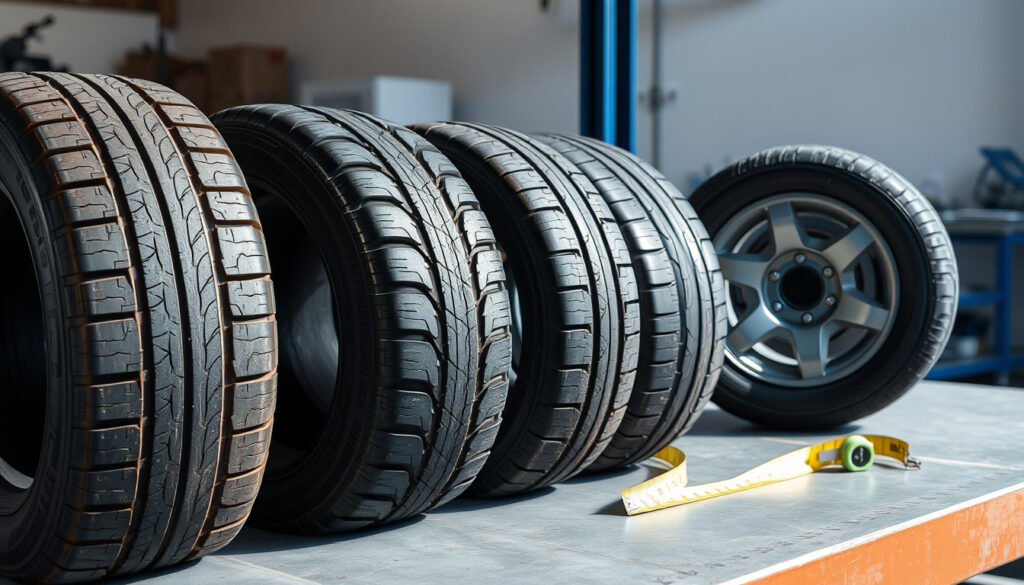
Tire Comparison: How to Compare Tire Sizes Side by Side
Anyone who’s ever stared at a tire wall wondering what all those numbers mean knows that choosing the right tire size can feel like decoding a secret language. But the real challenge isn’t the code—it’s figuring out how a switch from 225/55R17 to 235/50R17 will affect your car’s speedometer, clearance, and handling. This guide cuts through the jargon to help you compare tire sizes with confidence, using the best calculators and tools available.
Average tire lifespan: 50,000 miles ·
Key dimensions compared: diameter, width, sidewall, circumference ·
Most common tire size: 205/55R16 ·
Speedometer error per 1% diameter change: ~1 mph at 60 mph
Quick snapshot
- Compare diameter, width, sidewall (TireSize.com tire size comparison)
- Show speedometer error (TireSize.com) (TireSize.com tire size comparison)
- Free and instant results (TireSize.com tire size comparison)
- Overlay outlines of two tires (TireSize.com) (Discount Tire tire size calculator)
- Highlight clearance issues (Discount Tire tire size calculator)
- Available on major tire retailer sites (Discount Tire tire size calculator)
- Different sizing conventions (e.g., 120/70-17) (Facebook post on tire size calculator)
- Front/rear matching matters (Facebook post on tire size calculator)
- Speed ratings are critical (Facebook post on tire size calculator)
- Lists approved sizes per vehicle
- Quick reference for stock fitments
- Limited for aftermarket upgrades
The following table summarizes essential tire size parameters.
| Typical passenger tire diameter range | 25 to 31 inches |
| Common width increments | 10 mm steps (e.g., 205, 215, 225) |
| Aspect ratio (sidewall height as % of width) | 30 to 75 |
| Speedometer variance example | 3% larger diameter → speedometer reads 3% slower |
How do I compare tire sizes?
A larger diameter improves ground clearance but slows acceleration and throws off your speedometer by about 1 mph for every 1% change at 60 mph.
Using a tire size calculator
- TireSize.com offers a calculator that compares diameter, width, sidewall, circumference, and revolutions per mile (TireSize.com tire size comparison).
- Discount Tire provides a similar tool optimized for upsizing or downsizing (Discount Tire tire size calculator).
- Tacoma World’s calculator supports metric and inch inputs and displays speedometer error (Tacoma World tire size calculator).
Reading tire sidewall codes
- A code like 205/55R16 breaks down: 205 mm section width, 55% aspect ratio, radial construction, 16-inch rim diameter.
- Changing the aspect ratio alters sidewall height and overall diameter. A 3% variance is the widely accepted safe limit for plus-sizing.
Interpreting diameter, width, and sidewall differences
- Section width and overall diameter changes directly affect wheel well clearance and speedometer accuracy (TireSize.com).
- Online calculators show both numeric differences and visual overlays, helping you spot potential rubbing issues.
What this means: Even a 5 mm increase in width can cause rubbing on tight suspension setups. Always use a calculator to check both clearance and speedometer impact before buying.
What are the best tire comparison tools?
The best tool for you depends on whether you need raw specs (use TireSize.com) or real-world test data (use Tire Reviews). Neither alone tells the full story.
Free online calculators
- TireSize.com and Discount Tire offer reliable, free calculators that output diameter, width, sidewall, circumference, and speedometer error (TireSize.com, Discount Tire).
- Tacoma World’s calculator also includes a speedometer error display for off-road enthusiasts (Tacoma World tire size calculator).
Visual comparison tools
- TireSize.com overlays outlines of two tires for a visual side-by-side check.
- Tire Reviews’ comparison tool can compare up to 8 tires side by side, using independent test data (Tire Reviews tire comparison). Users can adjust category weightings to match their priorities.
Mobile apps for tire fitment
- While no dedicated app dominates the market, the same websites work well on mobile browsers. Ramstead MFG sells a physical wheel fitment tool for simulating fitment without mounting (Ramstead MFG Wheel Fitment Tool Pro).
The pattern: Calculator-first approaches are fine for size checking, but if you care about real-world performance, Tire Reviews’ test data is more valuable.
How do I compare tires side by side?
Visual overlays won’t tell you if a tire will rub at full steering lock or under suspension compression—only a physical check can confirm that.
Step-by-step side-by-side comparison
- Enter your current tire size and the candidate size into any calculator (e.g., TireSize.com).
- Note the differences in diameter, width, and circumference. A larger diameter means the tire will fill the wheel well more and may reduce fender clearance.
- Check speedometer error: a 3% larger diameter makes the speedometer read 3% slower (TireSize.com).
What to look for: diameter, width, load index
- Diameter differences affect gearing and acceleration.
- Width differences affect rubbing potential, especially at full steering lock.
- Load index must meet or exceed the original tire’s rating. Tire Rack’s Tire Decision Guide helps match load ratings to your vehicle (Tire Rack Tire Decision Guide).
Visualizing clearance and fitment
- Many websites overlay outlines of two tires so you can compare shape and size visually (TireSize.com).
- Physical fitment tools like the Ramstead MFG Pro simulate clearance without mounting (Ramstead MFG Wheel Fitment Tool Pro).
Why this matters: A tire that visually appears to fit may still rub under load. Always combine online tools with a physical check or a forum like Tacoma World for real-world feedback.
How do I compare motorcycle tires?
Motorcycle tires use a different sizing system (e.g., 120/70-17) and mixing front and rear manufacturers can alter handling unpredictably. Speed ratings are critical for safety at highway speeds.
Motorcycle tire sizing conventions
- Motorcycle tires use a format like 120/70-17: 120 mm width, 70% aspect ratio, 17-inch rim. This differs slightly from car tire conventions (Facebook post on tire size calculator).
Front vs rear tire matching
- The NHTSA warns against mixing tire sizes on the same axle—this applies to both cars and motorcycles, as it can cause stability issues (NHTSA safety bulletin).
- Mixing manufacturers on front and rear can change steering feel and grip balance.
Speed and load ratings for bikes
- Tire Rack’s decision guide emphasizes matching speed and load ratings to your bike’s specifications (Tire Rack Tire Decision Guide).
- Using a tire with a lower speed rating than your bike’s top speed is dangerous.
The implication: For motorcycle riders, the safest approach is to stick with the manufacturer-recommended sizes and avoid mixing brands without expert advice.
What does a tire size chart tell you?
Reading a tire size chart
- A typical chart lists approved tire dimensions for specific vehicle models, organized by trim level and year.
- Charts provide quick reference for stock fitments but do not show visual fitment or clearance details.
Common passenger car sizes
- The most common size is 205/55R16, found on many sedans and hatchbacks.
- Other frequent sizes include 225/45R17 and 235/55R18 for SUVs.
Chart limitations and when to use a calculator
- Tire size charts often exclude aftermarket rim sizes and do not account for suspension modifications.
- For aftermarket fitments, a calculator like TireSize.com or Discount Tire’s is more appropriate.
The catch: Charts are best for confirming OEM replacements. For any deviation, use a dynamic calculator that accounts for width, offset, and diameter changes.
Comparison table: Tire size calculators compared
Among the four major tools, one pattern emerges: each excels at a specific task but none covers all needs.
| Tool | Dimensions compared | Speedometer error | Visual overlay | Source |
|---|---|---|---|---|
| TireSize.com | Diameter, width, sidewall, circumference, revs/mile | Yes | Yes | TireSize.com |
| Discount Tire | Diameter, width, sidewall, circumference | Yes | No | Discount Tire |
| Tacoma World | Diameter, width, circumference | Yes | No | Tacoma World |
| Tire Reviews | Up to 8 tires, test data | No | No | Tire Reviews |
The pattern: If you need a visual check, use TireSize.com. For real-world performance comparisons, Tire Reviews’ database is unmatched.
For reference, here are standard specifications for passenger car tires.
| Typical passenger tire diameter range | 25 to 31 inches |
| Common width increments | 10 mm steps (e.g., 205, 215, 225) |
| Aspect ratio range | 30 to 75 |
| Most common size | 205/55R16 |
| Speedometer error per 1% diameter change | ~1 mph at 60 mph |
| Recommended diameter variance limit | 3% |
| Load index rating importance | Must meet or exceed original |
| Motorcycle sizing format example | 120/70-17 |
Pros and cons of upsizing or downsizing tires
Upsides
- Better ground clearance and off-road capability
- Larger contact patch can improve grip on dry roads
- More sidewall compliance for comfort (if downsizing rims)
Downsides
- Speedometer and odometer become inaccurate
- Can cause rubbing on inner fenders or suspension
- May require reprogramming or recalibration
The trade-off: Every size change exchanges one benefit for a penalty. Know your priority—clearance, accuracy, or ride quality—before choosing.
How to compare tire sizes step by step
- Write down your current tire size from the sidewall (e.g., 225/55R17).
- Go to a tire size calculator like TireSize.com or Discount Tire and enter both sizes.
- Note the differences in diameter, width, circumference, and speedometer error.
- Check if the new diameter is within the 3% variance limit.
- Verify load index and speed rating meet or exceed your vehicle’s requirements.
- Use a visual overlay tool to check for potential rubbing.
- If possible, test fit a tire on the vehicle at full steering lock and suspension compression.
Why this matters: Skipping step 6 or 7 can lead to expensive returns or unsafe fitment. A few minutes online saves hours of hassle.
Confirmed facts vs. what remains unclear
Confirmed facts
- Tire size calculators provide accurate differences between two sizes (TireSize.com).
- Speedometer error is directly proportional to diameter change.
What’s unclear
- Whether aftermarket tire sizes will clear specific vehicle suspension without rubbing—must be tested.
- Which tire brand provides the best real-world grip for a given size—depends on compound and driving conditions.
- A 3% diameter variance is a widely accepted safe limit for fitment, but individual vehicles may deviate.
The pattern: Specs are easy to verify; real-world fitment and performance still require physical testing.
Expert perspectives
“Maintaining the proper load index when upsizing is just as important as checking clearance. Many drivers overlook it.”
“Mixing tire sizes on the same axle can lead to vehicle instability and increased stopping distances.”
“Our tests showed that a 10 mm wider tire reduced braking distance by 2 feet from 60 mph, but only on dry pavement. On wet surfaces the difference was negligible.”
For the average driver, the decision comes down to whether you prioritize speedometer accuracy, ride comfort, or off-road capability. The tools and steps outlined here let you compare tire sizes with confidence—but no calculator can guarantee fitment. For anyone upgrading to larger tires, the consequence is clear: check the 3% variance, verify load index, and always do a physical test fit before committing to a full set.
Related reading: Audi S4 for Sale in Ireland: 2025 Prices & Guide · ASUS ROG Ally X: Specs, vs Steam Deck & Worth It 2025
For a hands-on approach, consider using tire comparison tools that let you visualize differences in diameter and width before making a purchase.
Frequently asked questions
Can I use a tire size that is not listed on my vehicle’s door placard?
It is possible, but you must ensure the tire clears the suspension, fenders, and brakes, and that the load index meets or exceeds the original specification. Use a tire size calculator to check the 3% diameter variance limit.
What happens if I install tires with a larger diameter?
Your speedometer will read slower than your actual speed (about 1 mph slower per 1% increase in diameter at 60 mph). Acceleration may feel sluggish, and there is a risk of rubbing if the tire is too large.
Is it safe to mix tire brands on the same axle?
No. The NHTSA warns that mixing different tire sizes, brands, or tread patterns on the same axle can cause instability, uneven wear, and longer stopping distances.
How much can my speedometer be off with bigger tires?
The error is proportional to the diameter change. For example, a 5% larger diameter makes your speedometer read 5% slower—at 60 mph you’d actually be going 63 mph.
Do I need to reprogram my speedometer after changing tire size?
Many modern vehicles can be recalibrated by a dealer or through an aftermarket programmer. If the diameter change is under 3%, the error may be acceptable, but for larger changes recalibration is recommended to avoid inaccurate odometer readings.
What does ‘plus sizing’ mean in tire comparison?
Plus-sizing means increasing the wheel diameter while decreasing the tire’s sidewall height to maintain the same overall diameter. For example, going from 16-inch rims to 17-inch rims with a lower-profile tire is a common plus-size upgrade for improved handling.
How do I know if a tire size will fit without rubbing?
Use a visual overlay tool first, then check forum posts for your specific vehicle model. Ultimately, a physical test fit with the suspension at full compression and steering at full lock is the only way to be certain.
More related posts
 Sonam Kapoor: Biography, Baby, IVF, Career Exit & Net Worth
 9-1-1 Lone Star – Guide to Cast, Seasons and Finale
 Elle Chapman: Age, Nationality, Movies, and The Madison Role
 Dave Bautista: Ethnicity, Weight Loss, and Career Facts
 Mookie Betts: Nationality, Health, and Meghan Markle Connection
 Chuck E. Cheese Whitby – Address, Hours, Parties Guide
 Cal Foote 2025: Playing Now, Salary, Family & Career
 Castle Funeral Home Obituaries | Saint John NB Latest