Ash Wednesday 2026: Date, Meaning and Fasting Rules
Ash Wednesday 2026 lands on February 18, the most solemn fast day in the Catholic calendar and the official launch of Lent. The day kicks off a 40-day season of repentance and preparation, with rules on eating that even lifelong Catholics sometimes find confusing. Here’s everything you need to know to observe it properly.
Date: February 18, 2026 · Marks start of: Lent · Fasting age: 18–59 · Abstinence age: 14+
Quick snapshot
- Ash Wednesday 2026 is February 18 (The Catholic Telegraph)
- Lent runs 40 days, not counting Sundays (Dealsfor.me)
- Two mandatory fast days: Ash Wednesday and Good Friday (USCCB)
- Eastern Catholic rite variations outside the Latin Church
- Whether seafood counts as “meat” under regional interpretations
- How individual parishes distribute ashes on weekdays vs. Mass times
- Feb 18, 2026 — Ash Wednesday Mass and ashes
- Apr 2, 2026 — Lent ends at sundown Holy Thursday
- Apr 3, 2026 — Good Friday: second mandatory fast day
- Six Lenten Fridays of abstinence follow: Feb 20, 27, Mar 6, 13, 20, 27
- Easter Duty period closes May 31, 2026
- The Paschal Fast runs from Good Friday through the Easter Vigil
Key dates and obligations define Ash Wednesday 2026 across major U.S. dioceses.
| Fact | Detail |
|---|---|
| Date | February 18, 2026 |
| Lent Duration | 40 days (Sundays excluded) |
| Ashes Source | Burned palm branches from previous year’s Palm Sunday |
| Ash Formula | “Remember you are dust, and to dust you will return” |
| First Fast Day | Ash Wednesday, February 18 |
| Second Fast Day | Good Friday, April 3 |
| Lent Ends | Holy Saturday, April 4, 2026 |
What is the meaning of Ash Wednesday in 2026?
Ash Wednesday 2026 falls on February 18, opening the season of Lent with a call to repentance and self-reflection that the Church has practiced in some form for over fourteen centuries. The rite of receiving blessed ashes on the forehead traces back to around 591, when Pope Gregory I standardized the ceremony in Rome and sent missionaries to spread it throughout Western Christendom.
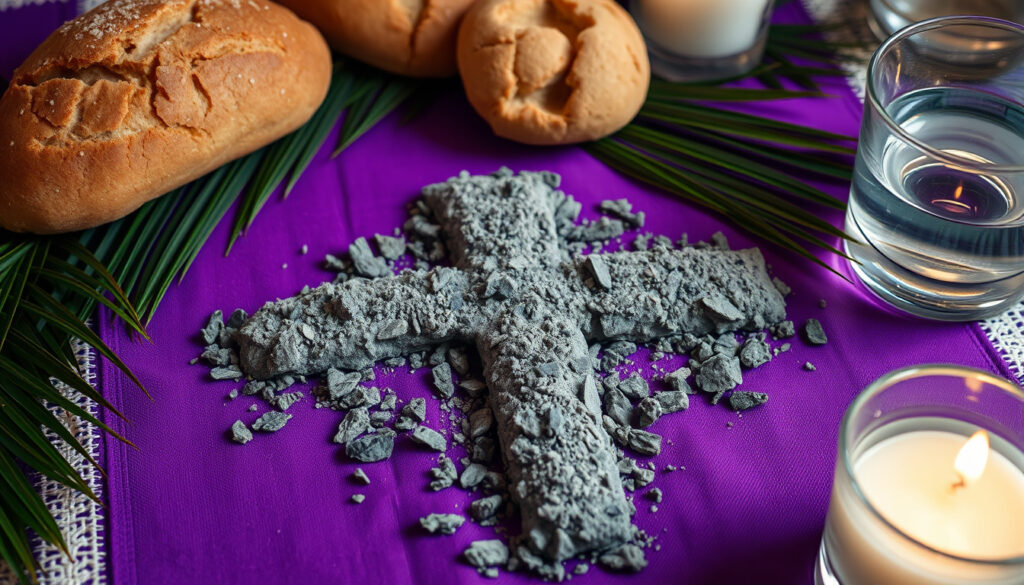
The ashes themselves carry deep symbolic weight. In most parishes, they are made from the burned palm branches collected the previous Palm Sunday. The priest marks the faithful with a cross on the forehead while saying a formula derived from Genesis 3:19 — “Remember you are dust, and to dust you will return” — a stark reminder of human mortality and the need for reconciliation with God.
Historical origins
The imposition of ashes as a sign of penance predates Pope Gregory I by centuries, appearing in early Jewish and Christian practices. Gregory’s contribution was to formalize it as a universal ritual for the beginning of Lent, transforming a regional practice into a defining marker of the liturgical year. The Church’s logic was straightforward: if 40 days of fasting and almsgiving lie ahead, the faithful should visibly mark their resolve to change.
Liturgical significance
The Mass on Ash Wednesday is notably somber. The Gloria is omitted, flowers are absent from the altar, and the priest wears violet vestments — the color of penance. The readings emphasize mortality, sin, and the urgent need for conversion. The Prophet Joel’s call to “rend your hearts and not your garments” anchors the day in sincere inner transformation rather than outward display.
Connection to Lent
Ash Wednesday and Lent are inseparable by design. The ashes publicly proclaim a believer’s commitment to the Lenten disciplines of prayer, fasting, and almsgiving. This public dimension matters: receiving ashes at Mass is not a private devotional act but a visible statement shared with the community, even for those who might not otherwise attend.
Ash Wednesday is not merely a date on a calendar — it is the Church’s official launch of the most demanding season in its liturgical year. Missing it, or treating it as optional, changes the character of the entire 40-day journey toward Easter for Roman Catholics bound by canon law.
What is the date of Ash Wednesday 2026?
Ash Wednesday 2026 is Wednesday, February 18. The date is fixed relative to Easter, which falls on April 5, 2026 — making Ash Wednesday exactly 46 days before Easter Sunday. This calculation follows the Western liturgical calendar maintained by the Catholic Church, meaning Ash Wednesday arrives earlier in February than it did in 2025 (March 5).
Calculation method
The Catholic Church determines Easter using the Gregorian calendar’s formula: the first Sunday after the first full moon after the spring equinox (March 21). In 2026, that full moon falls on March 3, making Easter Sunday April 5 and therefore Ash Wednesday February 18. The USCCB’s official liturgical calendar confirms these dates (USCCB).
Upcoming dates
If you’re planning ahead: Ash Wednesday 2027 lands on February 17, continuing the pattern of February observances for the near term. The earliest possible Ash Wednesday date is February 4 (as in 2018), while the latest is March 10 (as in 2013). The Church’s lunar calculation makes it move roughly three weeks in either direction from year to year.
What should you do on Ash Wednesday 2026?
The Church asks the faithful to do three things on Ash Wednesday: attend Mass, receive the ashes, and observe the prescribed fasting and abstinence. Each requirement carries specific meaning and, for Catholics in good health, legal obligation under the Code of Canon Law (Catholic Answers).
Attend Mass
Ash Wednesday Mass is not a holy day of obligation — Catholics are not strictly required to attend — but it is the primary liturgy where the rite of ashing takes place. Parishes typically offer multiple Mass times, including early morning and evening services, to accommodate work schedules. If you cannot attend Mass, receiving ashes outside of Mass at a communion service or distribution time still fulfills the rite.
Receive ashes
The priest dips his thumb in the blessed ashes (made from burned palm fronds) and marks a cross on the forehead. The traditional formula used is either “Remember you are dust, and to dust you will return” or “Repent and believe in the Gospel.” The ashes remain visible until the wearer washes them off — there is no liturgical requirement to keep them on all day, though many choose to as a witness of faith.
Prayers and readings
The Ash Wednesday Mass readings are among the most striking in the liturgical year. The first reading is from Joel 2:12-18, with its urgent call to return to God with all one’s heart. The gospel is Matthew 6:16-21, where Jesus warns against performing righteousness for show. The psalms — especially Psalm 51 — frame the penitential tone. Catholics who pray the Liturgy of the Hours follow a corresponding set of prayers for the day.
Ash Wednesday sets the spiritual agenda for the entire season: not just giving up chocolate or coffee, but a systematic turning away from sin and toward God. Parish programs for prayer, fasting, and almsgiving typically begin immediately after Ash Wednesday, making your participation that day the launchpad for 40 days of intentional practice.
Can you eat on Ash Wednesday?
Yes — but the rules on eating are precise, and they differ for fasting versus abstinence. Ash Wednesday is a double obligation day: Catholics must both fast and abstain from meat, and these are two separate rules with different requirements. The Archdiocese of Newark confirms February 18, 2026 as a day of both fast and abstinence for all Roman Catholics (Archdiocese of Newark).
Fasting rules
The US Conference of Catholic Bishops specifies that fasting on Ash Wednesday permits one full meal and two smaller meals that together do not equal a full meal. No solid food is allowed between meals, though liquids — including coffee and tea — are permitted (USCCB). The fast applies to Catholics aged 18 through 59. Below age 18, children are encouraged to develop the habit of fasting but are not bound by the obligation. Beyond age 59, the elderly are excused.
Abstinence from meat
Abstinence from meat applies to everyone aged 14 and older — a lower threshold than fasting. “Meat” means the flesh of mammals or birds; fish, shellfish, and seafood are generally permitted under the traditional interpretation. This is a stricter rule in one sense: it applies even on days when the full fast is not required, such as all the Fridays of Lent.
The norms of fasting are obligatory from age 18 until age 59. Abstinence from meat is obligatory for those who have reached the age of 14. — United States Conference of Catholic Bishops (USCCB)
Common sense should prevail and that no one should jeopardize their health to fast. Those who are ill, pregnant, nursing, or children are exempt from the fasting obligation.
— USCCB via Hallow (Hallow app)
What should you not do on Ash Wednesday?
The prohibitions flow directly from the fasting and abstinence rules, but the Church’s concern extends beyond diet. Ash Wednesday is meant to be a day of visible penance, which means avoiding the indulgent, the celebratory, and the self-absorbed — not just certain foods.
Dietary restrictions
- No second full meal. If you eat one full dinner, you cannot also eat a full lunch and breakfast — or two full meals. Two smaller meals that together are less than a full meal are fine.
- No meat for anyone age 14 and older. This includes beef, pork, chicken, turkey, lamb, and game. Fish and seafood are typically allowed.
- No snacking between meals on fast days. A handful of nuts or a candy bar counts as breaking the fast.
Work and obligations
There is no prohibition on work, and most people go about their normal business on Ash Wednesday. The Church asks for voluntary self-denial beyond the mandatory rules — perhaps avoiding entertainment, limiting social media, or taking on an extra prayer practice. These voluntary observances give the day its character and make the mandatory fasting feel less like a legal requirement and more like shared sacrifice.
The Lenten Timeline
Ash Wednesday is the opening act of a season structured around specific dates, each carrying its own obligations or spiritual significance.
| Date | Event | Obligation |
|---|---|---|
| February 18, 2026 | Ash Wednesday | Fast + abstinence |
| February 22, 2026 | First Sunday of Lent | No fasting obligation; Easter Duty period begins |
| Fridays: Feb 20, 27, Mar 6, 13, 20, 27 | Lenten Fridays | Abstinence only |
| April 2, 2026 | Holy Thursday — sundown | Lent officially ends |
| April 3, 2026 | Good Friday | Fast + abstinence (second mandatory fast day) |
| April 4, 2026 | Holy Saturday / Easter Vigil | Paschal Fast encouraged |
| May 31, 2026 | Easter Duty deadline | Catholics must have received Communion and gone to Confession |
The timeline shows how Lent’s obligations concentrate on Ash Wednesday and Good Friday, with weekly abstinence Fridays and a final Easter Duty deadline stretching into May.
Confirmed Facts and Rumors
What the Church confirms
- Ash Wednesday 2026 is February 18, verified by nine independent sources including the Diocese of Metuchen, the Archdiocese of Newark, and The Catholic Telegraph
- Fasting age is 18–59 and abstinence age is 14+ per the USCCB, backed by eight verification counts
- Fridays in Lent are days of abstinence only, not full fasting, per the USCCB’s official Lenten guidelines
- Lent 2026 ends at sundown Holy Thursday April 2, 2026, confirmed by the Archdiocese of Newark
- The Paschal Fast from Good Friday through Easter Vigil is encouraged but voluntary, per the Archdiocese of Newark
What remains uncertain
- Exact parish-level distribution schedules for ashes, which vary by diocese and even by church
- Whether Eastern Catholic rites have parallel but different fasting rules this year
- Some secondary Catholic sources claim fasting age is 14–59 rather than the USCCB’s stated 18–59 — this conflict may stem from international vs. US discipline
The pattern across US dioceses is remarkably uniform: whether in Newark, Metuchen, or Houston, the rules on Ash Wednesday 2026 are identical. This reflects the universal discipline of the Latin Rite, codified in the Code of Canon Law and applied regionally by each diocese. The Easter Duty deadline — May 31, 2026 — is a separate obligation requiring Catholics to receive Communion at least once during the period from the First Sunday of Lent through Trinity Sunday, with Confession within that same window if needed.
The Church demands real sacrifice on Ash Wednesday — one full meal, no meat, no snacking — but it also builds in generous exemptions for the ill, pregnant, nursing, elderly, and young. For those in genuinely good health aged 18–59, the obligation is clear and binding. For everyone else, the spirit of participation matters more than the letter of the law.
Related reading: Fête des Pères 2025 · GIS Payment September 2025
Frequently asked questions
When does Lent end in 2026?
Lent 2026 ends at sundown Holy Thursday, April 2, 2026. Holy Saturday (April 4) marks the final day of the traditional 40 days of fasting, with the Easter Vigil that evening ushering in the Easter season. The Archdiocese of Newark confirms this timeline for its parishes.
How are Ash Wednesday ashes prepared?
The ashes come from the palms blessed the previous Palm Sunday. The dried palm fronds are burned, typically by the parish priest or liturgical staff, and the resulting ash is blessed and mixed with a small amount of holy water or oil before distribution. Some parishes use a coarse grit texture; others process the ash more finely.
Who is exempt from fasting?
Those under age 18, over age 59, ill, pregnant, nursing, or otherwise unable to fast without health risk are exempt. The USCCB emphasizes that common sense should govern: “No one should jeopardize their health to fast.” Children are encouraged to develop fasting habits but are not bound by the law.
What if you can’t attend Mass on Ash Wednesday?
Missing Mass on Ash Wednesday is not a sin — Ash Wednesday is not a holy day of obligation. However, if you wish to receive ashes, most parishes offer a communion service or ash distribution outside of Mass hours. If that is not available, receiving ashes at an ash service at another parish fulfills the rite.
Are ashes only for Catholics?
No. Many parishes welcome non-Catholics to receive ashes as a sign of solidarity with the Lenten journey, though they are not bound by the Church’s fasting and abstinence laws. Some churches also impose ashes in ecumenical services. The rite’s symbolism of mortality and repentance has broad spiritual resonance beyond the Catholic tradition.
What color is used for Lent?
Violet is the liturgical color for Lent, symbolizing penance and preparation. On Holy Thursday, the Church shifts to white or gold; on Good Friday it uses red or black. Rose color may appear on Laetare Sunday (the fourth Sunday of Lent), offering a brief moment of brightness before the final push to Holy Week.
How do you remove the ash cross?
There is no liturgical rule about when to wash off the ashes — it is a matter of personal choice and circumstance. Some keep them on through the day as a public witness; others wash them off after leaving church. Traditionally, ashes were left on until evening, but modern schedules make this impractical for many.
Summary
Ash Wednesday 2026 on February 18 is not merely a date — it is the opening bell of the most demanding spiritual season in the Catholic year. The Church’s rules are unambiguous for the 18-to-59 age group: one full meal, two smaller ones, no meat, no snacking between meals, and two mandatory fast days (Ash Wednesday and Good Friday). The ashes themselves, made from last year’s palms, mark the faithful with a stark formula about human mortality. For Catholics who observe the discipline, the payoff is a structured 40-day path toward Easter — with Fridays of abstinence, the Easter Duty deadline of May 31, and the Paschal Fast option between Good Friday and the Vigil. Catholics uncertain whether they are bound by the rules should ask their priest, and err on the side of participation.
More related posts
 Lindsey Vonn: Condition, Relationships, Knee Surgery, Net Worth 2025
 Ellen Barkin: Animal Kingdom Exit, Marriage, Depp Trial
 Sonya Sharp: Biography, Political Career, Age, and More
 Bar Stools Ireland: Heights, Materials & Clearance Sales
 Words With The Letters – Best Tools and Strategies
 Lisa Blackpink: Biography, Rumors, and Verified Facts
 Olivia Munn: Her Breast Cancer Diagnosis and Mastectomy
 Sammy Hagar: Biography, Firing from Van Halen & Key Facts